

The new enforcement strategy targets dangerous bike modifications as over 300 motorcycles seized nationwide this year.
Subscribe to our Instagram channel for the latest info and news!
The Road Transport Department (JPJ) has announced a tougher enforcement approach against riders involved in extreme motorcycle modifications, with offenders now facing direct prosecution under Section 42 of the Road Transport Act 1987.
The move comes amid growing concerns over increasingly dangerous motorcycle modifications that compromise road safety and put both riders and other road users at risk.
According to Bernama, JPJ Senior Enforcement Director Datuk Muhammad Kifli Ma Hassan revealed that three investigation papers have already been opened under the provision and have received approval from the Deputy Public Prosecutor for prosecution.
Previously, JPJ mainly relied on enforcement measures such as issuing compounds and seizing illegally modified motorcycles. However, the department is now escalating its response by bringing serious cases directly to court.
“We have detected motorcyclists riding dangerously and recklessly. What is most concerning is that some riders have even removed their rear brakes. Imagine riding a motorcycle without brakes,” said Muhammad Kifli during a press conference held in conjunction with Ops Motosikal (Ekstrem) at JPJ Kuala Lumpur headquarters.
He stressed that any motorcycle found with extreme modifications would be seized and legal action would be taken against the rider involved.
JPJ also revealed that more than 300 heavily modified motorcycles have been seized nationwide since the beginning of 2026, with Kuala Lumpur recording the highest number of cases.
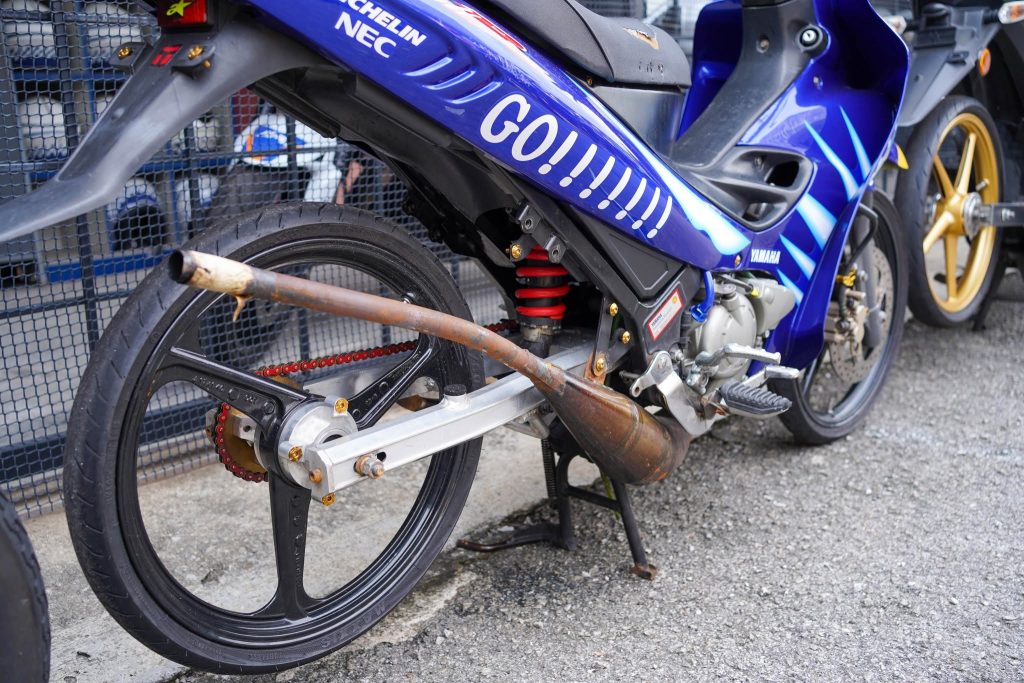
Among the most common illegal modifications detected are ultra-thin tyres or better known as “tayar sotong”, unauthorised engine swaps, extended swingarms, modified or deleted Electronic Control Unit (ECU) systems, and the removal of rear braking systems.
Muhammad Kifli said such modifications significantly alter the motorcycle’s original safety specifications and increase the likelihood of accidents.
“JPJ takes a serious view of this trend because it compromises the original safety features of the vehicle and increases road safety risks,” he explained.
According to JPJ, most offenders fall within the 18 to 30-year-old age group. However, the department has also detected cases involving school students as young as 12 years old.
To strengthen enforcement efforts, JPJ has established a dedicated task force known as Team Falcon, which conducts weekly operations targeting motorcycles suspected of undergoing extreme modifications.
JPJ statistics show that a total of 38,959 motorcycles have been seized under Section 64(1) of the Road Transport Act 1987 between 2021 and 2026 for various offences involving non-compliance with road regulations.
The department also issued 848,885 notices to motorcyclists in 2024, followed by 711,722 notices in 2025 and 252,118 notices during the first five months of 2026 alone.
JPJ warned that enforcement action will not be limited to riders alone. Summonses may also be issued to registered vehicle owners, including parents whose motorcycles are used by underage riders or individuals committing offences.The study of possible legal action against workshops involved in carrying out illegal motorcycle modifications.
The department is also working closely with the Ministry of Domestic Trade and Cost of Living (KPDN), the Royal Malaysian Customs Department and local authorities to ensure aftermarket parts and components sold in the market comply with existing regulations.
With the latest enforcement approach, JPJ hopes to curb the growing trend of extreme motorcycle modifications and improve road safety nationwide.











Facebook
Instagram
X (Twitter)
YouTube
LinkedIn
RSS