

City Cruiser or All-Road Adventurer? Selecting Honda’s Ultimate 157cc Duo Built on Shared Technology.
Subscribe to our Instagram Channel for instant news & updates!
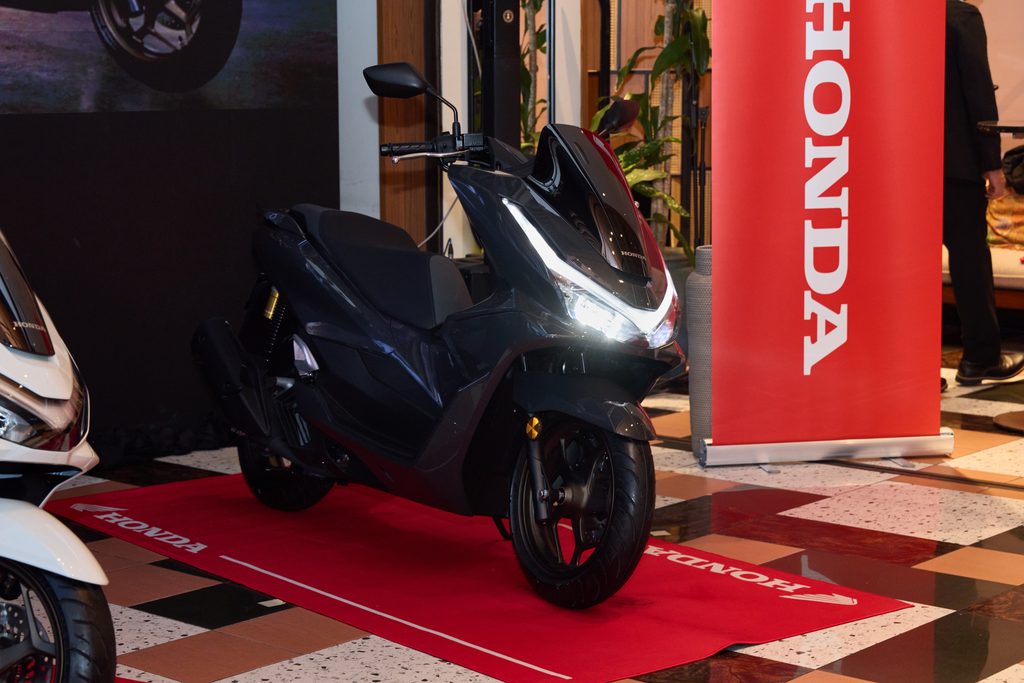
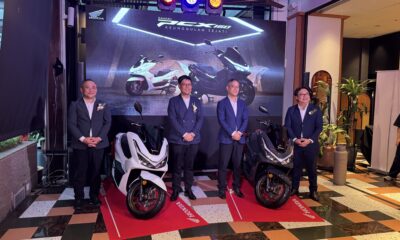
Boon Siew Honda has officially reintroduced the all-new Honda PCX160 to the Malaysian market, ending a six-year hiatus for the popular premium urban scooter. Freshly updated with sharper styling, refined ergonomics, and integrated smartphone connectivity, the new PCX160 aims directly at daily commuters looking for sophistication.
Notably, it comes standard with the Honda RoadSync system via Bluetooth, making it the second scooter in Honda’s local lineup to feature this smart tech, following in the tire tracks of the recently refreshed ADV160.
If you’re in the market for a premium daily commuter, the Honda PCX160 and Honda ADV160 stand out as two of the most compelling choices from Boon Siew Honda. While both scooters share the same potent 157cc eSP+ engine, hassle-free automatic transmission, generous storage, and modern rider tech, they cater to distinctly different riding styles.
The PCX160 prioritizes sleek, urban comfort and smooth highway cruising, whereas the ADV160 leans into adventure-inspired styling, generous ground clearance, and all-road versatility.
With prices starting at RM12,998 for the PCX160 and RM13,249 for the ADV160 ABS, the difference is relatively small. So, which scooter makes more sense for Malaysian riders? Let’s compare their prices, engine performance, comfort, features and everyday practicality.

1. Price: Honda PCX160 vs Honda ADV160
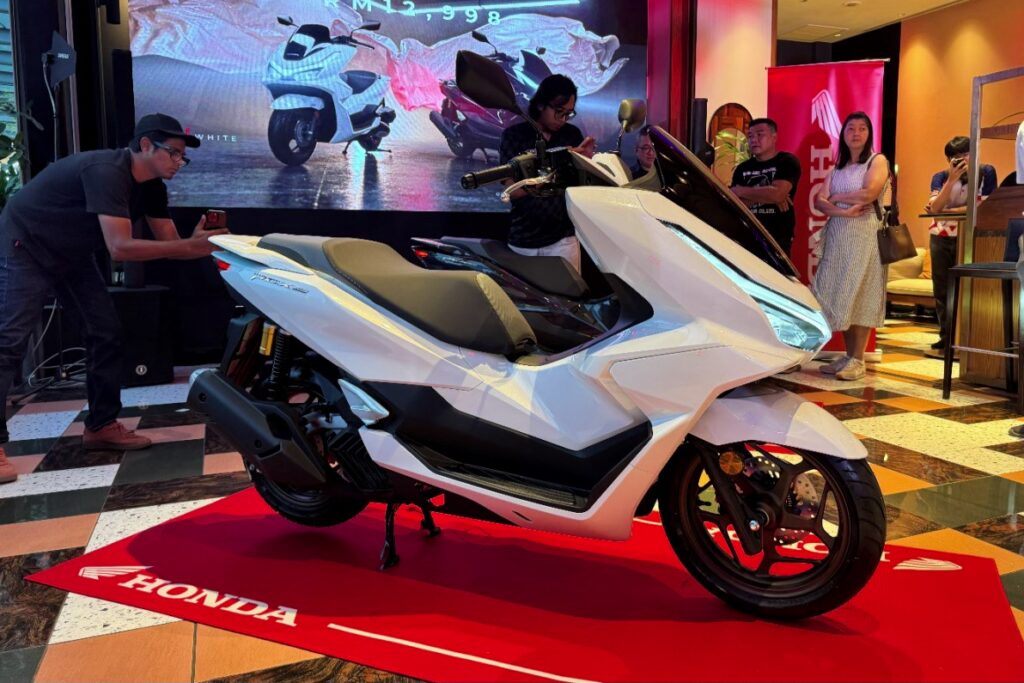
Price is often the first thing to consider when choosing a new scooter, especially if you plan to use it for commuting every day. The Honda PCX160 is priced at RM12,998, excluding road tax, insurance and registration. It is available in Grey and White, offering a more understated appearance that suits its premium urban positioning.
Meanwhile, the Honda ADV160 ABS starts at RM13,249, while the higher-spec ADV160 RoadSync is priced at RM13,649. That makes the PCX160 RM251 cheaper than the standard ADV160 ABS and RM651 cheaper than the RoadSync variant.
Although the difference is not particularly large, the PCX160 may appeal to riders who want a premium scooter while keeping the initial purchase price lower. The ADV160, on the other hand, gives buyers the option of a more rugged design, with the RoadSync variant adding smartphone connectivity through its five-inch TFT display.
However, both models come with a two-year or 20,000km manufacturing warranty, whichever comes first. But for PCX160, Customers trading in their previous-generation Honda PCX150 for the new PCX160 will also receive an additional one-year extended warranty under the Honda X-Tend Warranty programme.
2. Engine Performance: Which Scooter Is More Powerful?
Underneath their different bodywork, the Honda PCX160 and Honda ADV160 share a similar engine configuration. Both scooters use Honda’s 156.9cc, liquid-cooled, single-cylinder, four-valve eSP+ engine paired with an automatic transmission.
However, there is a slight difference in their published power and torque figures. The PCX160 produces a maximum output of 11.3kW at 8,500rpm and 14.1Nm of torque at 6,500rpm, according to Boon Siew Honda’s specifications. The ADV160 in other hands, produces around 11.8kW at 8,500rpm and 14.7Nm at 6,500rpm, giving it a small advantage on paper.
In everyday riding, both scooters are suited to travelling through city traffic, running errands and cruising along urban roads. Their automatic transmissions also make them convenient for riders who frequently encounter stop-and-go traffic.
The ADV160’s higher published output may appeal to riders who want the extra performance on paper, but both models occupy the same general category of practical, mid-sized automatic scooters.
3. Design: Premium Urban Scooter or Adventure Style?
This is where the two Honda scooters differ most noticeably. The Honda PCX160 adopts a sleek, modern design with smooth bodywork, flowing lines and a premium maxi-scooter appearance. Its styling is more restrained, making it suitable for riders who prefer an elegant scooter for work, shopping and everyday travel.
The Honda ADV160 takes a different approach with angular bodywork, a more upright appearance and adventure-inspired styling. Its design gives it a tougher look, particularly with its adjustable windscreen and more rugged overall proportions.
However, despite its adventure-inspired appearance, the ADV160 remains a scooter primarily intended for road use rather than serious off-road riding, despite its name adventure.
If you prefer a clean, sleek, and simple but premium look, the PCX160 may be more appealing. If you want a scooter that stands out with more adventurous characteristics, the ADV160 has the stronger visual identity. Furthermore, the ADV160 has already carved out a solid reputation within the local riding community, making it a familiar and proven favorite among riders.
4. Comfort and Handling: Which Is Better for Daily Commuting?
For Malaysian riders, comfort matters just as much as performance, especially when a scooter is used for daily commuting. The Honda PCX160 has a seat height of 764mm and a kerb weight of 132kg. Its relatively low seat makes it easier for many riders to place their feet on the ground when stopping at traffic lights or maneuvering in parking areas.
The PCX160 also features telescopic front forks and twin rear shock absorbers with remote gas reservoirs. Combined with its road-oriented design, the suspension setup is intended to provide a comfortable ride for everyday use.
Meanwhile, the ADV160 has a higher seat height of approximately 780mm and a kerb weight of around 133kg, making it slightly taller and heavier. Its suspension setup includes a telescopic front fork and twin rear shock absorbers with external reservoirs. It also features a two-step adjustable windscreen, which allows riders to adjust the screen position according to their preferences.
The ADV160’s higher ground clearance and upright design may be useful when navigating uneven urban roads, speed bumps and rougher surfaces.
For riders who prioritise easier mounting, a lower seat and a more city-focused riding experience, the PCX160 has an advantage on paper. The ADV160 may suit those who prefer a taller riding position and additional clearance. Actual comfort will still depend on rider height, body proportions and personal preference.
5. Technology and Features: Both Offer Modern Equipment
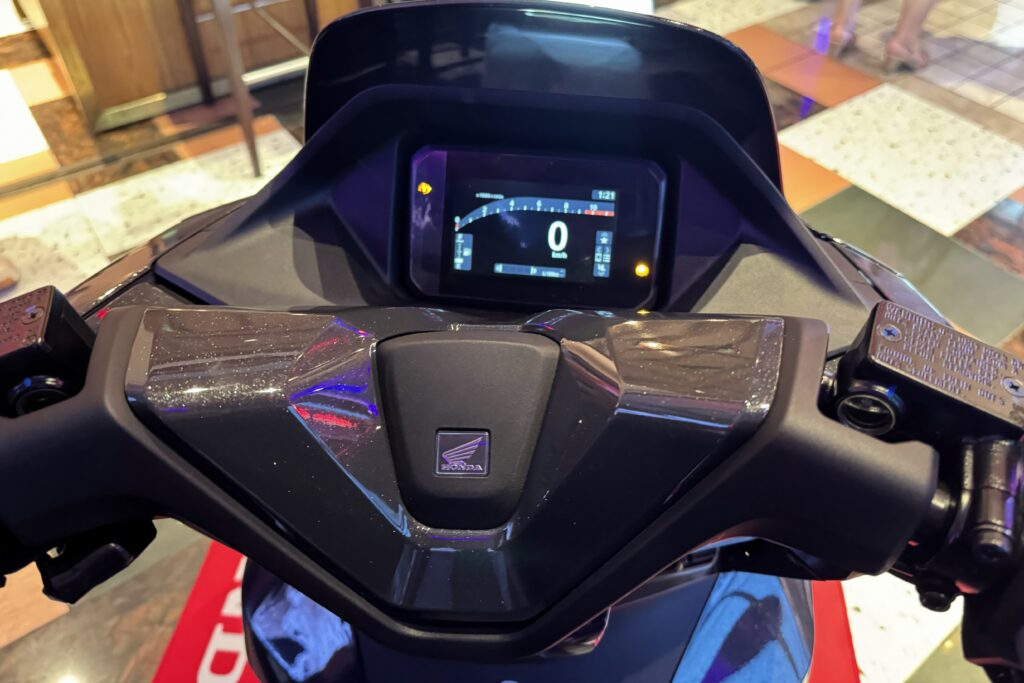
Despite their different designs, both scooters come with a useful range of modern features. The Honda PCX160 includes a five-inch TFT display with Honda RoadSync smartphone connectivity. Riders can access supported functions such as calls, messages, music and navigation through the connected system.
It also comes with a Honda Smart Key system, Honda Selectable Torque Control (HSTC), an Idling Stop System and a USB Type-C charging port.
The ADV160 ABS also features HSTC, a Smart Key system, Idling Stop System and USB Type-C charging. However, its standard ABS variant uses a conventional digital display without RoadSync connectivity.
For riders who want the connected experience, the ADV160 RoadSync variant adds a five-inch TFT display with smartphone integration, providing functions such as navigation, calls, messages and music control. Both scooters also feature LED lighting and practical under-seat storage.
If smartphone connectivity is important to you, the PCX160 includes Honda RoadSync as standard. For the ADV160, buyers need to choose the more expensive RoadSync variant to access the same type of connectivity.
6. Storage and Fuel Capacity: Which Is More Practical?
Practicality is another important consideration when choosing a scooter for everyday use. Both the Honda PCX160 and Honda ADV160 offer 30 litres of under-seat storage, providing space for everyday belongings and selected riding accessories.
The actual items that fit will depend on their size and shape, so riders should check the storage compartment if they intend to carry a particular helmet or other bulky equipment. Both models also have an 8.1-litre fuel tank, giving them similar fuel-carrying capacity.
For the PCX160, Boon Siew Honda lists a claimed fuel consumption figure of 2.3 litres per 100km. This translates to a theoretical range of approximately 350km from a full tank under the stated consumption figure, although actual range will vary depending on traffic, riding style, load and road conditions.
The ADV160 also has an 8.1-litre tank, with Boon Siew Honda promoting a potential range of up to approximately 350km under suitable conditions. So, for daily commuting, both offer practical storage and fuel capacity. Neither has a clear advantage in tank size, so the choice comes down more to styling, ergonomics and the type of roads you regularly use.
So, Which Should You Buy?
Choosing between the Honda PCX160 and Honda ADV160 comes down to how you intend to use your scooter. Both models share the same engine capacity, automatic transmission, fuel tank size and under-seat storage capacity. Neither is an outright winner for every rider, as comfort and usability will depend on individual needs.
Before you place your deposit, factor in your daily route, riding ergonomics, budget, and which tech features you’ll actually use. Ultimately, the perfect scooter is the one that fits your personal riding style, delivers effortless comfort on the road, and sits right in your financial sweet spot.
Looking for more options? Visit our website to browse a wider range of motorcycles. Whether you’re searching for a ride that fits your budget or hunting for your ultimate dream bike, We’ve got you covered!
Ingat Motor, Ingat iMotorbike!







Facebook
Instagram
X (Twitter)
YouTube
LinkedIn
RSS