

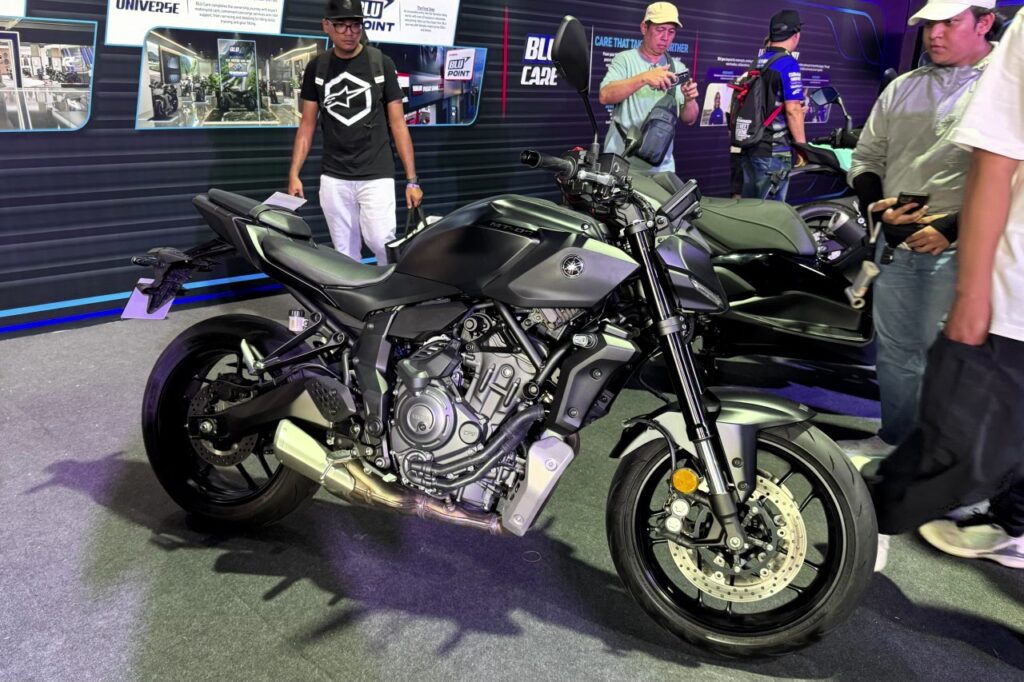
The fourth-generation middleweight naked bike was displayed alongside the newly launched 2027 Yamaha YZF-R9 at the PETRONAS Grand Prix of Malaysia 2026, potentially hinting at a future Malaysian introduction.
Subscribe to our Instagram Channel for instant news & updates!
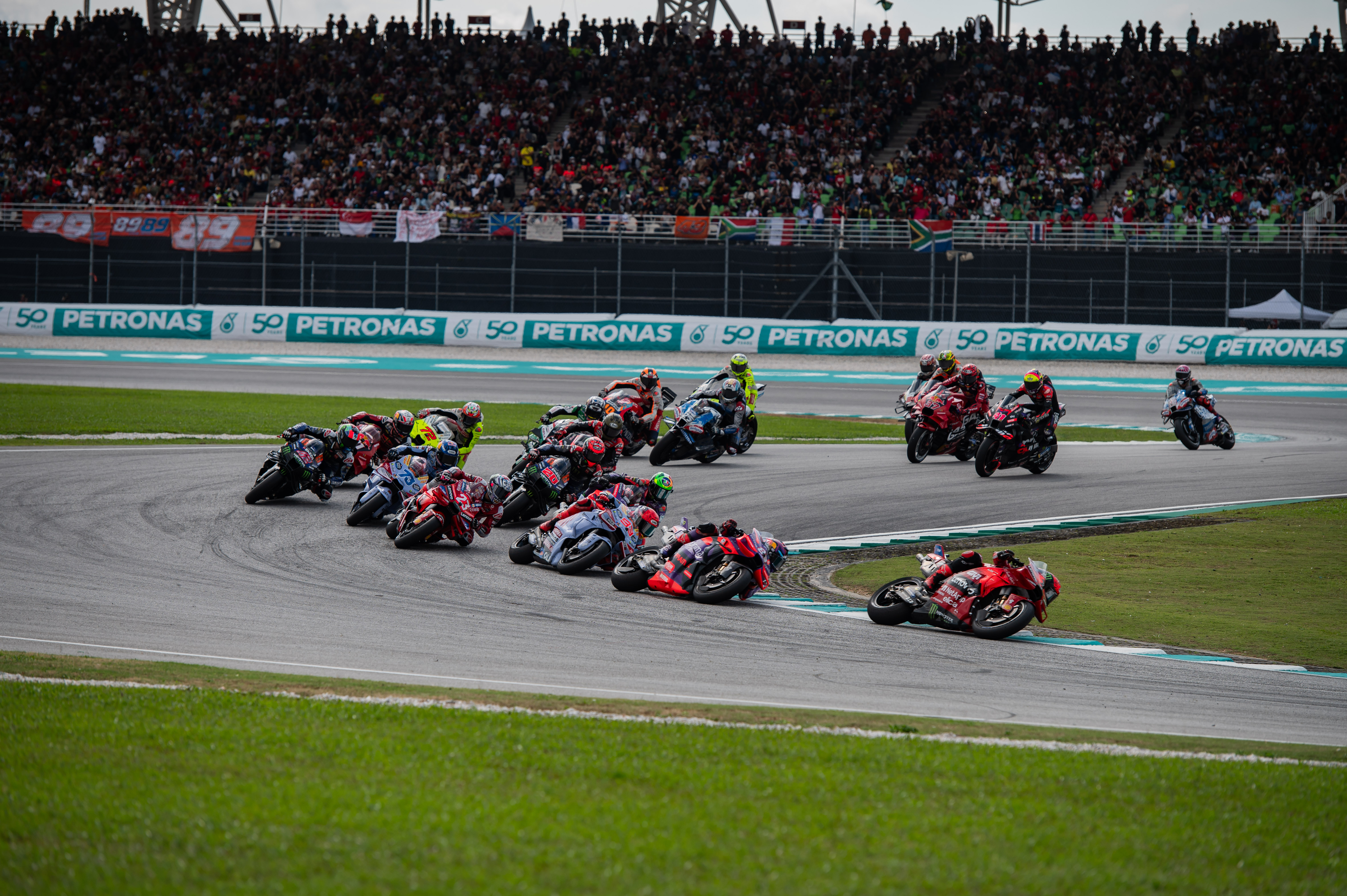
The fourth-generation Yamaha MT-07 made an appearance at the PETRONAS Grand Prix of Malaysia 2026 at Sepang International Circuit, where it was displayed alongside the newly launched 2027 Yamaha YZF-R9. While there has been no official confirmation of a Malaysian launch, its appearance has sparked speculation that the popular middleweight naked bike could eventually return to the local market.
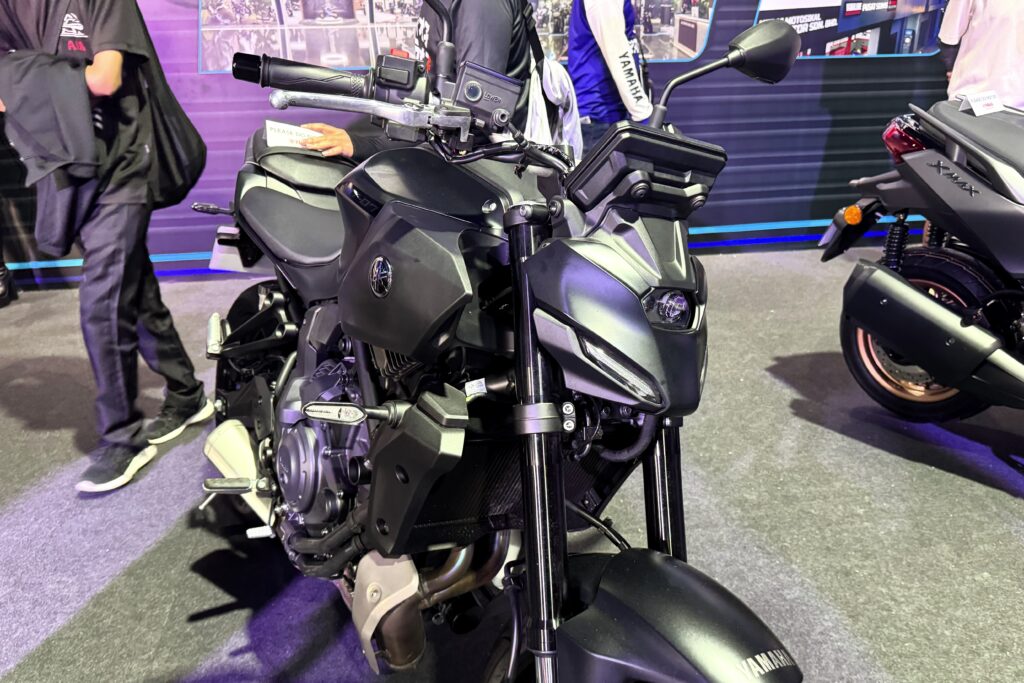
First introduced in 2025, the latest MT-07 represents a major overhaul of Yamaha’s popular middleweight naked motorcycle. Now continuing into the 2027 model year, the updated machine receives a revised chassis, upside-down front forks, ride-by-wire throttle, updated electronics and the option of Yamaha’s automated manual transmission.
Although the MT-07 retains its familiar styling identity, Yamaha has made substantial changes to its mechanical package. The motorcycle continues to use the 690cc liquid-cooled, DOHC, four-valve-per-cylinder Crossplane 2 (CP2) parallel-twin engine, now updated to meet Euro 5+ emission standards.
The engine is also paired with an assist and slipper clutch, reducing the force required to operate the clutch lever by approximately 22%. The slipper function helps control excessive back-torque and engine braking during downshifts, allowing for smoother and more consistent corner entry.
Another interesting addition is Yamaha’s Y-AMT (Yamaha Automated Manual Transmission), available as an option. This system allows riders to switch between automatic and manual transmission modes without using a conventional clutch lever.
In automatic mode, riders can choose between D and D+ settings. D mode provides smoother and more balanced gear changes for everyday riding, while D+ delivers a sportier character by holding gears longer and shifting at higher engine speeds.
For those who prefer full control, the manual transmission mode allows gear changes through handlebar-mounted switches operated using the thumb and index finger. Riders can also use a single-finger operation for a more sporting riding experience. The Y-AMT version also comes with cruise control, making longer highway journeys more convenient.
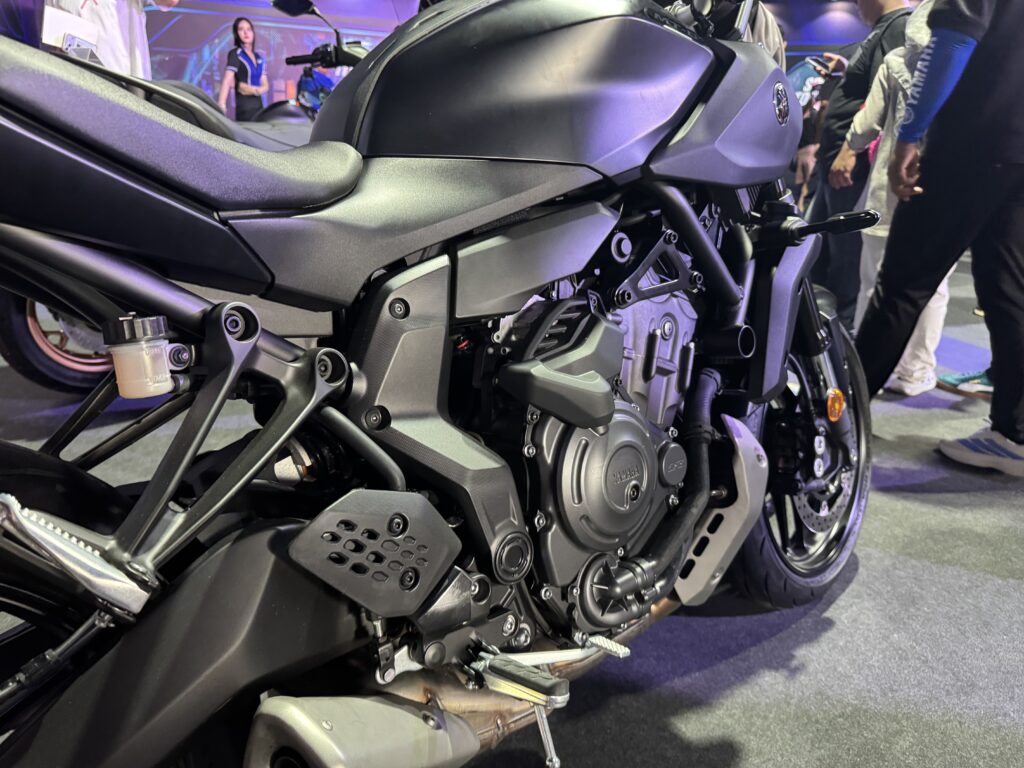
Yamaha has also made significant improvements to the MT-07’s chassis and suspension setup. The motorcycle now features 41mm upside-down front forks paired with a die-cast aluminium triple clamp, marking a first for a large-capacity Yamaha model.
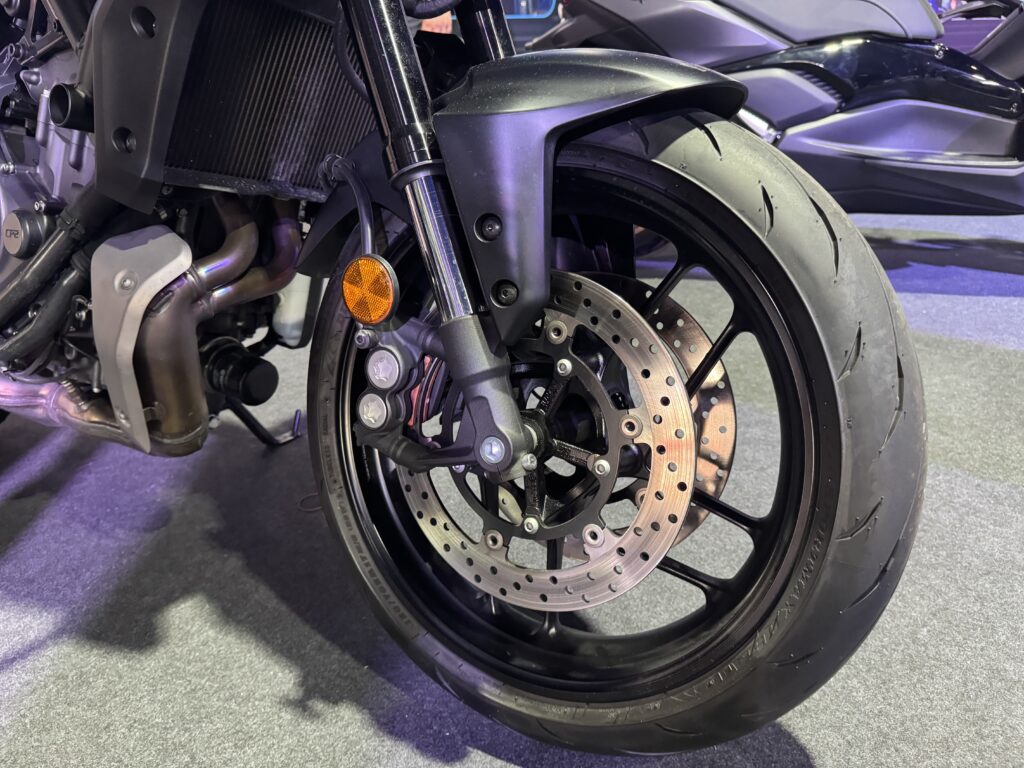
The braking system has also been upgraded with dual 290mm front discs and radially mounted four-piston calipers, providing stronger and more consistent braking performance.
Although the overall frame design remains visually familiar, the chassis has been redesigned from the headstock backwards. The new frame weighs 14.8kg while offering improvements of between 12% and 13% in torsional, longitudinal and lateral rigidity.
Yamaha has also introduced its SpinForged wheels, which are approximately 480g lighter than those fitted to the previous generation. This reduces rotational inertia at both ends by around 4%, contributing to improved handling and agility.
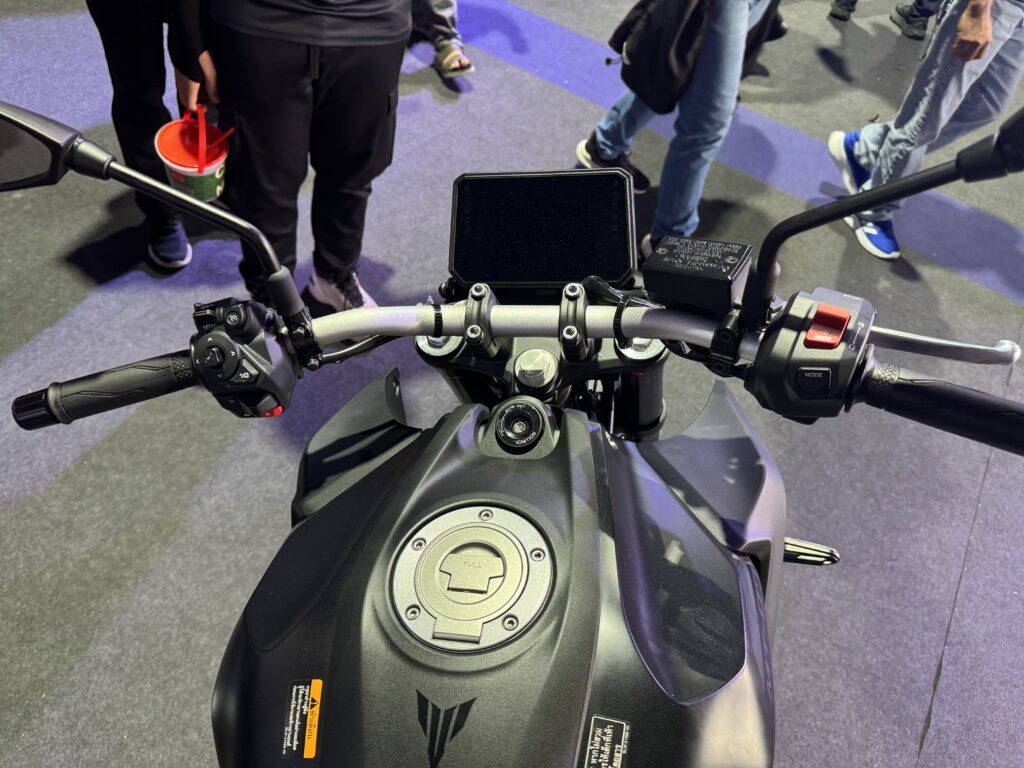
One of the biggest changes to the latest MT-07 is the introduction of an electronic ride-by-wire throttle system. This allows Yamaha to introduce its Yamaha Ride Control (YRC) system, offering three riding settings: Sport, Street and Custom. Riders can select different engine response characteristics depending on their preferences and riding conditions.
The electronics package also includes two-level traction control, while the Y-AMT transmission and optional quickshifter further expand the motorcycle’s available equipment. All information is displayed through a new 5-inch TFT-LCD instrument panel, controlled using redesigned switchgear on the left handlebar.
Other electronic features include a three-flash turn signal function for lane changes, self-cancelling indicators and an Emergency Stop Signalling system that activates the indicators during hard braking to alert vehicles behind. Yamaha has also introduced four openings in the fuel tank cover to amplify the sound of the CP2 engine and channel it towards the rider, adding another sensory element to the riding experience.
The latest MT-07 also receives revised ergonomics to improve rider comfort and handling. The handlebar position is now 18mm wider, 22mm lower and 9.3mm further back compared to the previous model. Meanwhile, the footpegs have been repositioned 10mm lower.
Seat height is set at 805mm, while the redesigned fuel tank cover is narrower to allow riders to grip the motorcycle more naturally with their knees. Fuel capacity remains unchanged at 14 litres.
Yamaha has also redesigned the two-piece seat assembly, with revised dimensions, shape and padding for both the rider and passenger. These changes are intended to make mounting easier while allowing the rider to move their body more freely during cornering.
For Malaysian riders, the biggest question is whether the latest MT-07 will eventually make its way into the local market. The model has not been part of Hong Leong Yamaha Motor’s regular big-bike lineup for several years. Its last recorded local recommended retail price was RM38,888 in 2019.
Since then, Yamaha Malaysia’s middleweight and large-capacity motorcycle offerings have placed greater focus on models such as the MT-09, which uses an 889cc CP3 (Crossplane 3-cylinder) engine.
With the fourth-generation MT-07 now making a public appearance at Sepang alongside the new YZF-R9, there is room to wonder whether Yamaha is preparing to reintroduce the model to Malaysian riders. However, its appearance at the Malaysian MotoGP event should not be taken as confirmation of a local launch. For now, Malaysian riders will have to wait for an official announcement from Hong Leong Yamaha Motor.









Facebook
Instagram
X (Twitter)
YouTube
LinkedIn
RSS