

One focuses on everyday usability and comfort, while the other delivers the thrilling character of a high-revving inline-four engine. But which one suits you better?
Subscribe to our Instagram channel for the latest info and news!
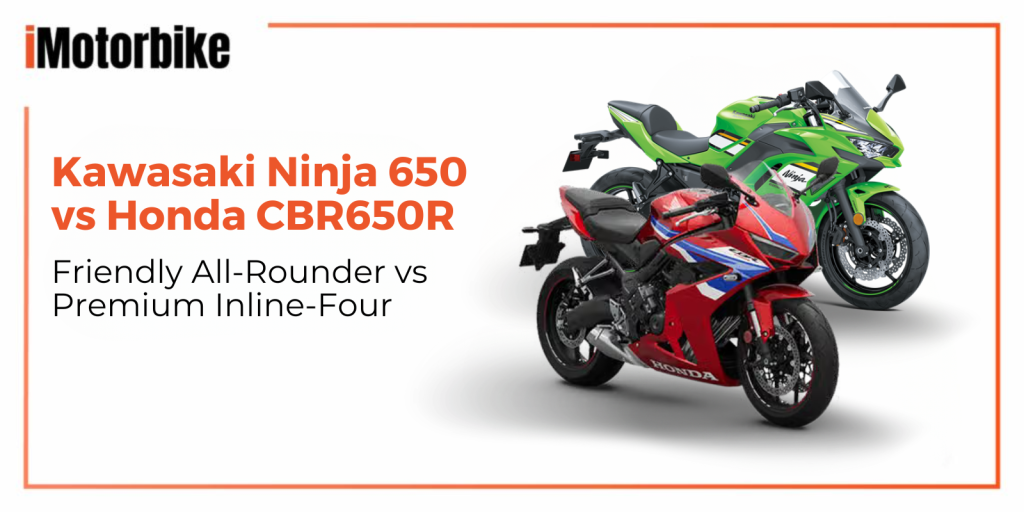
When it comes to middleweight sportbikes, two motorcycles that are constantly being compared are the Kawasaki Ninja 650 and the latest Honda CBR650R. Both motorcycles sit in a similar category and offer enough performance for daily riding, highway cruising, and even occasional spirited weekend rides. However, despite looking similar on paper, these two motorcycles actually offer very different riding experiences.
The Kawasaki Ninja 650 has always been known as one of the most rider-friendly sportbikes in the market focusing heavily on comfort, manageable power delivery, and practicality. While the Honda CBR650R takes a more premium and aggressive approach. It feels much closer to a supersport machine while still maintaining decent everyday usability. So, if you are considering one of these middleweight machines, which one should you choose?

Engine & Performance
Kawasaki Ninja 650
The Kawasaki Ninja 650 uses a 649cc parallel-twin engine that produces around 67 hp and 65 Nm of torque. What makes this engine special is not outright horsepower, but rather how usable and accessible the power delivery feels.
The torque comes in relatively early, making the bike feel smooth and responsive during city riding. You do not need to rev the bike aggressively to enjoy its performance. Even at lower RPMs, the bike already feels lively enough for overtakes and highway riding.
Because of this character, the Ninja 650 feels extremely forgiving and beginner-friendly. The throttle response is predictable, and the bike does not feel intimidating even for riders upgrading from smaller motorcycles.
Honda CBR650R
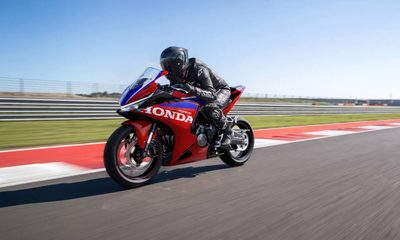
The Honda CBR650R, on the other hand, delivers a completely different personality. It is powered by a 649cc inline-four engine producing around 93 hp and 63 Nm of torque. Unlike the Ninja 650, the CBR650R loves to rev high. The power delivery feels smoother at lower RPMs but becomes significantly more exciting as the tachometer climbs higher.
This is where the famous inline-four character comes alive. The exhaust note becomes more aggressive, the engine feels sharper, and the acceleration becomes far more thrilling at higher speeds. Riders who enjoy high-revving engines and sporty riding will likely fall in love with the CBR650R almost instantly.
However, because of the higher power output and more aggressive nature, the CBR650R can feel slightly less forgiving compared to the Ninja 650, especially for newer riders. In simple terms, the Ninja 650 focuses more on usable everyday torque, while the CBR650R focuses on delivering excitement and emotion.

Features & Technology
Kawasaki Ninja 650
The Kawasaki Ninja 650 comes equipped with a modern electronics package that focuses heavily on practicality and rider confidence. It features Kawasaki Traction Control (KTRC), which helps improve stability and rear-wheel grip during slippery conditions or aggressive throttle inputs.
The bike also comes with dual-channel ABS, an assist and slipper clutch, as well as a 4.3-inch full-colour TFT display with smartphone connectivity through Kawasaki’s Rideology app. The TFT display itself is clean and easy to read, while the smartphone integration allows riders to access riding information and notifications more conveniently.
Although the Ninja 650 may not have the most advanced electronics package in the segment, the technology it offers feels practical and user-friendly for everyday riding. It complements the bike’s approachable character very well.
Honda CBR650R
The Honda CBR650R, meanwhile, takes a slightly more premium and performance-oriented approach when it comes to technology. The latest model comes with a full-colour TFT display, Honda Selectable Torque Control (HSTC), dual-channel ABS, and an assist and slipper clutch.
One of the standout features on the newer CBR650R models is Honda’s innovative E-Clutch technology. This system allows riders to shift gears without needing to operate the clutch lever manually while still preserving the feel of a traditional manual transmission. It creates a riding experience that feels both sporty and technologically advanced at the same time.
Overall, both motorcycles offer solid modern features, but the Ninja 650 feels more focused on simplicity and everyday usability, while the CBR650R leans more toward premium sportbike technology and rider engagement.
Ergonomics & Riding Comfort
Kawasaki Ninja 650
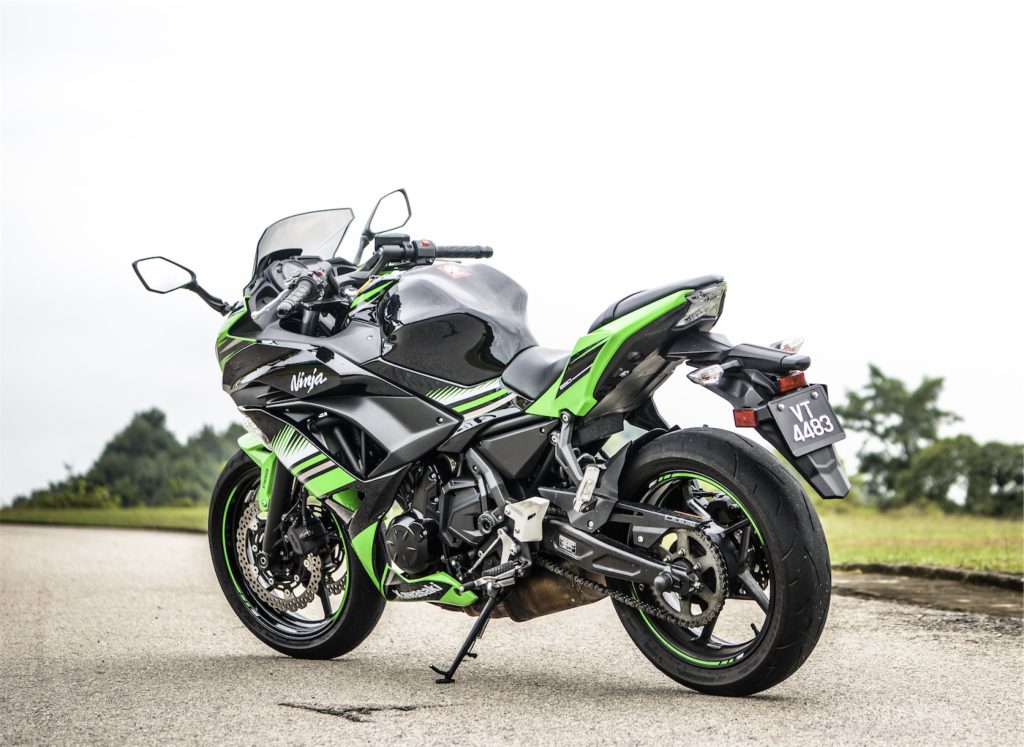
The Ninja 650 is designed with everyday comfort in mind. It features a relatively upright riding position with higher handlebars and a more relaxed seating posture compared to most sportbikes. The seat height sits at around 790 mm, making it approachable for a wide range of riders, including shorter riders or those upgrading from smaller motorcycles.
The bike also weighs approximately 193 kg wet, which makes it feel manageable and easy to control during low-speed riding or traffic situations. Even though it is not the lightest motorcycle in the category, the weight distribution feels balanced and confidence-inspiring.
Because of the relaxed ergonomics, the Ninja 650 feels extremely comfortable for daily commuting, highway cruising, and even longer-distance rides. Riders do not have to put excessive pressure on their wrists or lower back, making the bike less physically demanding during long hours on the saddle.
Honda CBR650R
The Honda CBR650R, meanwhile, offers a more sporty and engaging riding position. The clip-on handlebars are positioned lower, while the footpegs are positioned slightly towards the rear, creating a riding posture that feels more aggressive and performance-focused. The seat height is slightly taller at around 810 mm, which may feel a bit higher for shorter riders compared to the Ninja 650.
In terms of weight, the CBR650R comes in at approximately 211 kg wet. While the additional weight is noticeable when maneuvering the bike at lower speeds, it also contributes to a more planted and stable feeling during high-speed riding and cornering.
Despite having sportier ergonomics, the CBR650R is still considered one of the more comfortable inline-four sportbikes in the market today. The riding position is aggressive enough to feel sporty, but not extreme to the point of becoming uncomfortable for everyday use.
Overall, the Ninja 650 focuses more on comfort, accessibility, and ease of use, while the CBR650R prioritizes a sportier riding feel without becoming overly aggressive like a full supersport motorcycle.

Specifications Comparison
| Specifications | Kawasaki Ninja 650 | Honda CBR650R |
|---|---|---|
| Engine | 649cc Parallel-Twin | 649cc Inline-Four |
| Power | 67 hp | 93 hp |
| Torque | 65 Nm | 63 Nm |
| Transmission | 6-speed | 6-speed |
| Front Suspension | 41mm hydraulic telescopic fork | 41mm Showa Separate Function front Fork Big Piston (SFF-BP) USD forks |
| Rear Suspension | Horizontal back-link with adjustable spring preload | Monoshock damper with 10 stage adjustable preload |
| Front Brake | Dual 300mm petal-type discs and 2-piston calipers with ABS | 310mm Hydraulic Double Disc 4-piston Caliper with ABS |
| Rear Brake | Single 220mm petal-type disc and single-piston caliper with ABS | 240mm Hydraulic Single Disc with 1-piston Caliper with ABS |
| Weight | 193 kg | 211 kg |
| Seat Height | 790 mm | 810 mm |
| Fuel Tank Capacity | 15 Liters | 15.4 Liters |

Who is Suitable for Each Bike?
Kawasaki Ninja 650
The Ninja 650 is ideal for riders who want a comfortable and practical middleweight sportbike that is easy to ride every day. Its smooth power delivery, relaxed ergonomics, and approachable seat height make it especially suitable for newer riders, daily commuters, or those upgrading from smaller motorcycles who still want something sporty without feeling too aggressive.
Honda CBR650R
The CBR650R, meanwhile, is better suited for riders who want a more exciting and emotional riding experience. The high-revving inline-four engine, sportier ergonomics, and stronger top-end performance make it a great choice for riders who enjoy spirited riding, weekend rides, and the thrilling character that only an inline-four sportbike can deliver.
Overall, the Ninja 650 focuses more on comfort, accessibility, and ease of use, while the CBR650R prioritizes a sportier riding feel without becoming overly aggressive like a full supersport motorcycle.

Conclusion
Both motorcycles belong in the same middleweight category, but they offer completely different experiences. The Ninja 650 focuses on comfort, usability, and rider-friendliness. It is a motorcycle that feels easy to live with every single day and remains one of the best all-rounder sportbikes on the market.
The Honda CBR650R, meanwhile, delivers a much more thrilling and premium riding experience. The inline-four engine alone gives the motorcycle a character that is difficult to replicate, especially for riders who value sound and high-RPM excitement.
At the end of the day, the better motorcycle depends entirely on what kind of rider you are. If you want a practical and comfortable everyday sportbike, the Ninja 650 makes more sense. But if you want a motorcycle that feels more emotional, more aggressive, and more exciting every time you twist the throttle, the Honda CBR650R is difficult to ignore.












Facebook
Instagram
X (Twitter)
YouTube
LinkedIn
RSS