

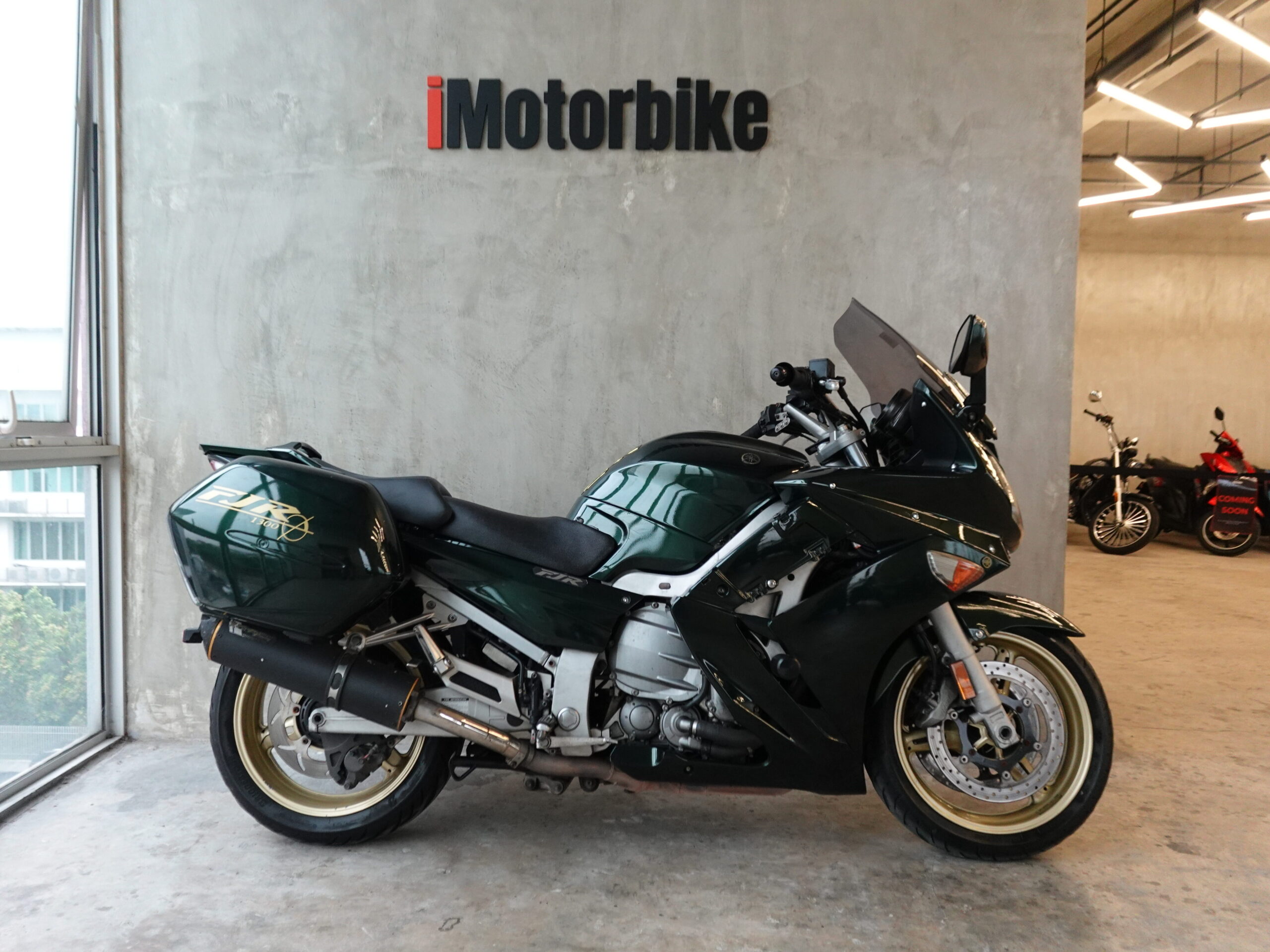
More than a decade after its debut, the Yamaha FJR1300A continues to impress with its smooth inline-four engine, long-distance comfort and surprisingly capable handling.
Subscribe to our Instagram channel for the latest info and news!
Long-distance touring is about more than just a plush seat and oversized panniers. A true sport-tourer must be ale to conquer hundreds of kilometres in effortless comfort, yet still deliver a rush of adrenaline the moment the road begins to twist. Few motorcycles have mastered that balance, and the Yamaha FJR1300A is undoubtedly one of them.
Introduced globally in 2001, the OG FJR1300 quickly earned a reputation for combining the comfort of a touring motorcycle with the performance of a sportbike, making it a favourite among riders who regularly clock thousands of kilometres on the open road. The FJR1300A came a year after with an Anti-lock Braking System fitted as standard.
The 2013 model marked one of the model’s biggest updates. Yamaha introduced a redesigned body, improved aerodynamics, an electronically adjustable windscreen, traction control, cruise control and Yamaha D-Mode, giving the motorcycle an even more refined and premium touring experience.
Unlike large touring motorcycles that prioritise comfort over performance, the FJR1300A aims to strike a balance between the two. It promises effortless highway cruising, plenty of power for overtaking and enough agility to keep riders entertained once the roads begin to twist.
I had the opportunity to spend some time with the 2013 Yamaha FJR1300A, putting it through a mixture of city traffic, highways and winding roads to see whether this sport-tourer still lives up to its reputation more than a decade after its introduction. It quickly became clear why the FJR1300 continues to be regarded as one of Yamaha’s most iconic touring motorcycles.
Engine & Transmission
At the heart of the FJR1300A sits a 1,298cc liquid-cooled DOHC inline-four engine, making around 145 hp at 8,500 rpm and 125 Nm of torque at 6,000 rpm. On paper, the numbers are certainly impressive, but what really stands out isn’t the peak horsepower. It’s the way this engine delivers its power.
Unlike supersport motorcycles that demand high revs before they come alive, the FJR1300A feels eager from the moment you twist the throttle. The amount of available low-end torque means the bike accelerates with very little effort, making overtakes almost effortless and allowing you to cruise at highway speeds without constantly working through the gearbox. Even with luggage or a passenger on board, the engine never feels strained.
The engine is paired with a five-speed transmission, a hydraulic wet multi-plate clutch, and a shaft final drive. While five gears might sound a little abnormal for a modern long-distance tourer, the engine’s broad torque delivery removes the need for an extra gear. The gear spacing is spot on, keeping the ride relaxed and flexible. Meanwhile, the shaft drive is a massive win for touring enthusiasts. It eliminates the messy cleaning and frequent lubrication of a traditional chain, all while delivering ultra-smooth, maintenance-free power transfer.
Design & Features
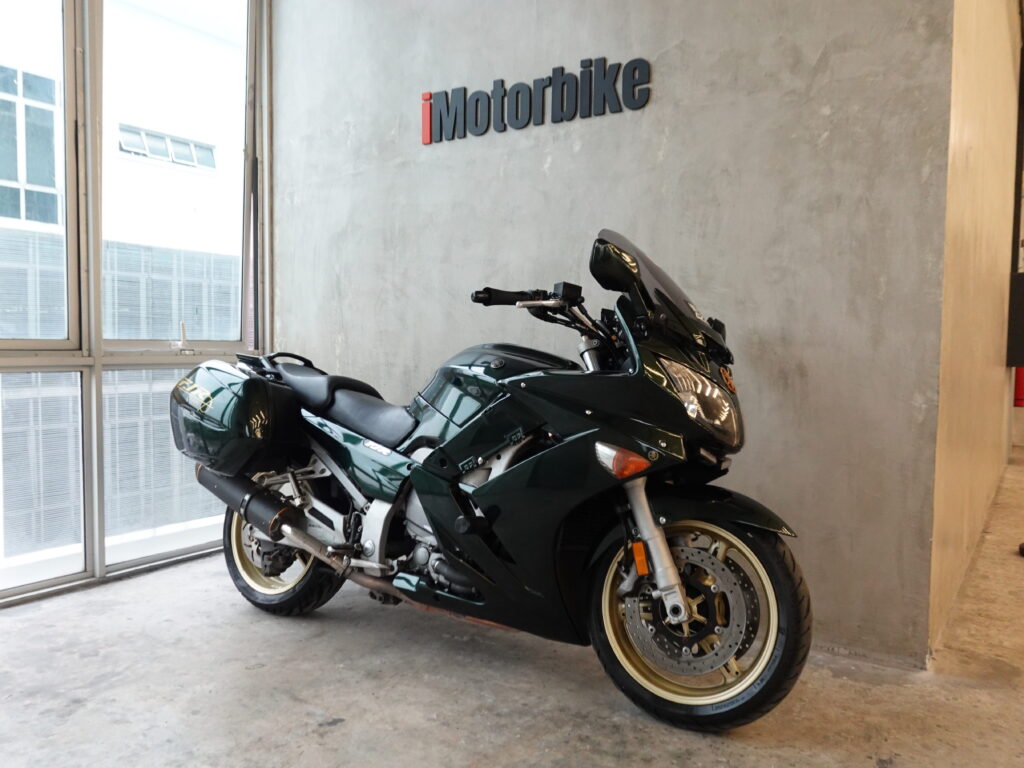
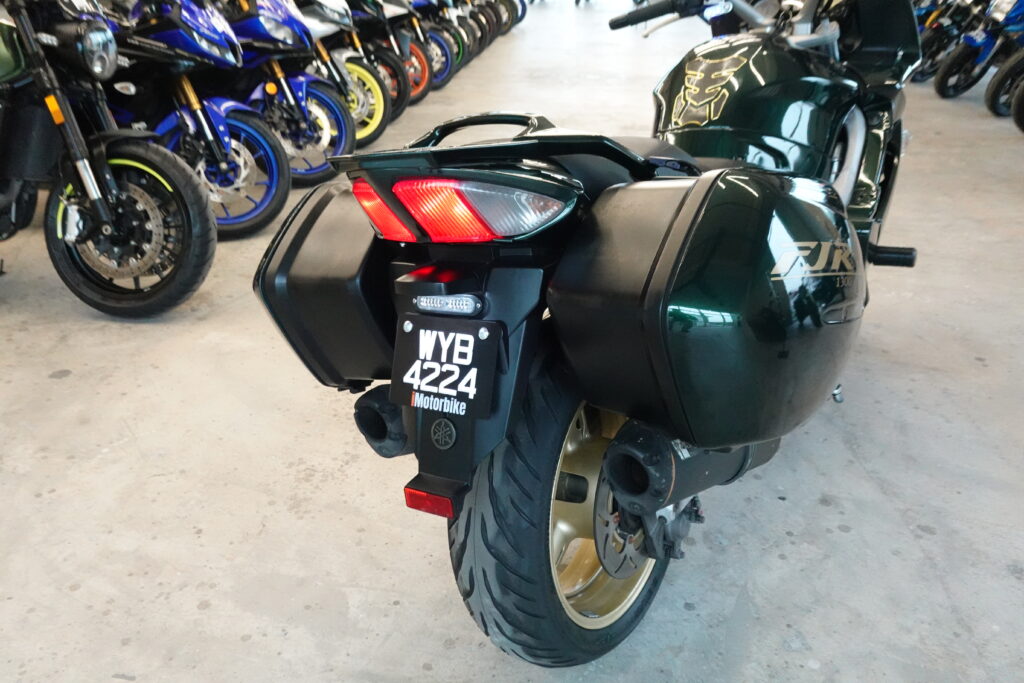
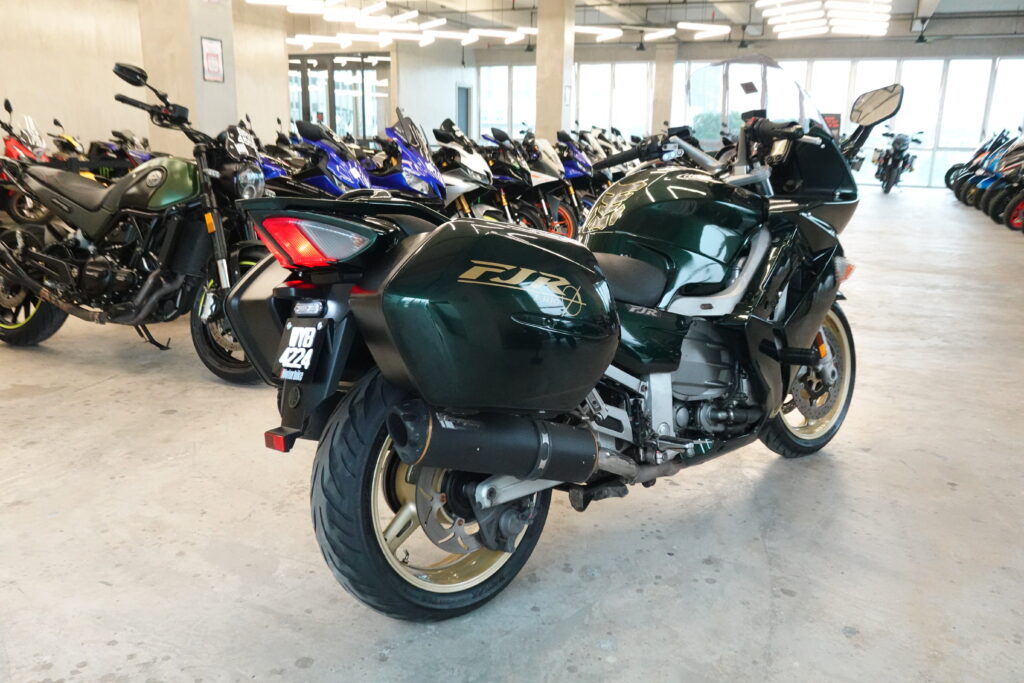
One look at the FJR1300A, it’s immediately obvious what this motorcycle was built for. It’s big, wide and undeniably beefy. With its large front fairing, integrated hard side panniers and rear luggage rack ready to accommodate a top box, the FJR1300A has all the visual cues of a motorcycle that’s designed to spend more time crossing states than sitting in city traffic.
Of course, its styling may appear a little dated by today’s standards. Modern sport-tourers have adopted sharper bodywork and more aggressive lines, but back in the day, this design was considered sleek and premium. Even today, I still think it has aged gracefully. There’s a certain timeless elegance to it that many newer motorcycles seem to lack.
The particular unit I tested had been resprayed in a deep dark green finish. Kind of like a British Racing Green shade that gives the bike a more understated appearance. It doesn’t immediately grab your attention from across the parking lot, but the closer you get, the more the colour complements the FJR’s touring character. Personally, I think it suits the bike surprisingly well.
For a motorcycle that’s more than a decade old, the FJR1300A is impressively well equipped. Yamaha fitted it with an adjustable rider’s seat, allowing the seat height to be raised or lowered by almost an inch to better suit different riders. The handlebars are also adjustable, making it easier to fine-tune the riding position for improved comfort on longer journeys.
Another feature I found particularly useful was the electronically adjustable windscreen, which lets you raise or lower the windscreen automatically while on the move rather than having to adjust it manually.
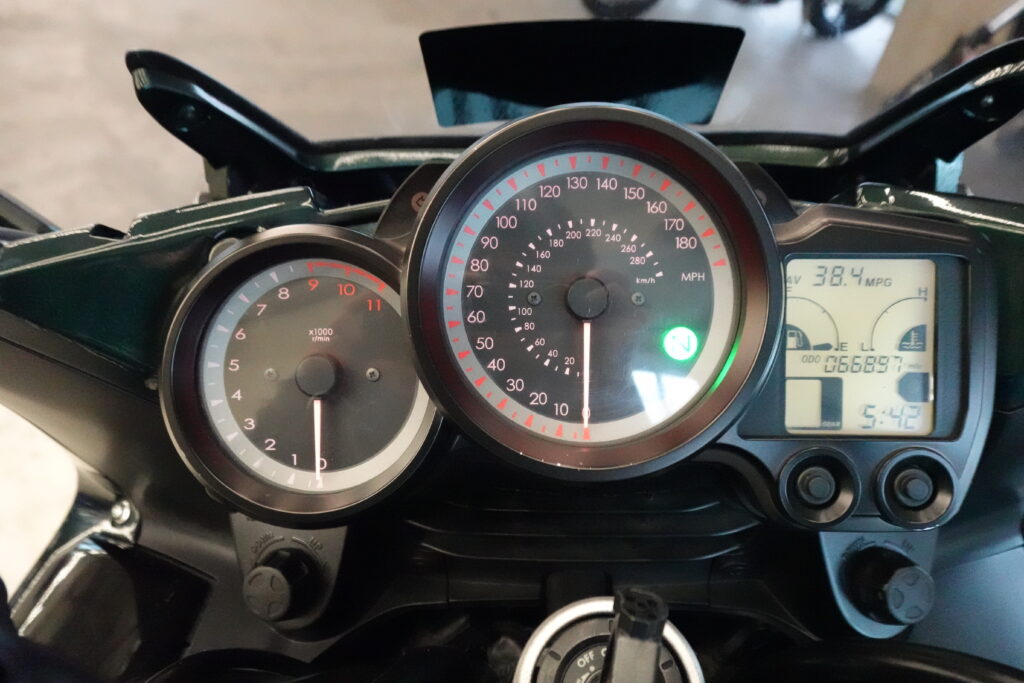
One feature that I particularly liked was the instrument cluster. Instead of a full digital display like on most motorcycles nowadays, Yamaha combined analogue gauges with an LCD display for the 2013 FJR, giving the dashboard a perfect blend of classic and modern. There’s just something satisfying about watching the speedometer and tachometer needles sweep across the dials every time you start the bike. At the same time, the LCD screen provides all the essential riding information in a clear and easy-to-read layout. Even by today’s standards, it’s a dashboard that still feels functional, timeless and surprisingly premium.
Riding Experience
There’s no getting around it, the FJR is a big motorcycle. Weighing in at around 291 kg, you definitely will feel every bit of that weight the moment you lift it off the side stand. It certainly gave my legs a bit of a leg day, and if you’re not used to handling large touring motorcycles, it can feel slightly intimidating at first.
The first few minutes on the move were quite interesting. The best way I can describe it is that it almost felt like riding a jet ski. It’s a strange comparison, but the combination of its size, weight and the way it glides along the road gave me that impression. Thankfully, that feeling didn’t last long. Going faster and faster, the FJR seemed to shed its weight, becoming noticeably lighter and much easier to manage.
Once out on the open road, this is where the FJR truly dominates. Cruising at highway speeds feels effortless, and the bike remains incredibly planted even when travelling at higher speeds. There was hardly any wobble or instability, giving me plenty of confidence to simply enjoy the ride.
The electronically adjustable windscreen also came in handy when I was riding. Whenever I felt too much wind hitting my helmet or chest, all it took was the press of a button to raise the windscreen, making long stretches of highway noticeably more comfortable.
Despite its size, what surprised me the most was how well the FJR1300A handled corners. I’ll admit, I was initially a little paranoid that the large side panniers might scrape the tarmac when leaning into bends. Fortunately, that never happened.
In fact, the bike felt far more agile than I expected. Once you trust the chassis and commit to the corner, it tips into turns with surprising confidence and composure. It may be a full-sized sport-tourer, but it certainly knows how to put a smile on your face when the road starts to get twisty.
Handling & Braking
Handling a motorcycle of this size might sound intimidating on paper, but the FJR does a great job of hiding its weight once you’re on the move. Up front, it is equipped with 48 mm fully adjustable telescopic forks, while the rear features a single shock absorber with adjustable spring preload and rebound damping. The suspension setup leans more towards comfort, but it still offers enough support to keep the bike composed when the pace picks up.
The suspension absorbed road imperfections remarkably well. Whether it was expansion joints on the highway or uneven road surfaces around town, the ride always felt well controlled without being overly soft. At the same time, there was still enough feedback from the chassis to inspire confidence when tackling a series of corners.
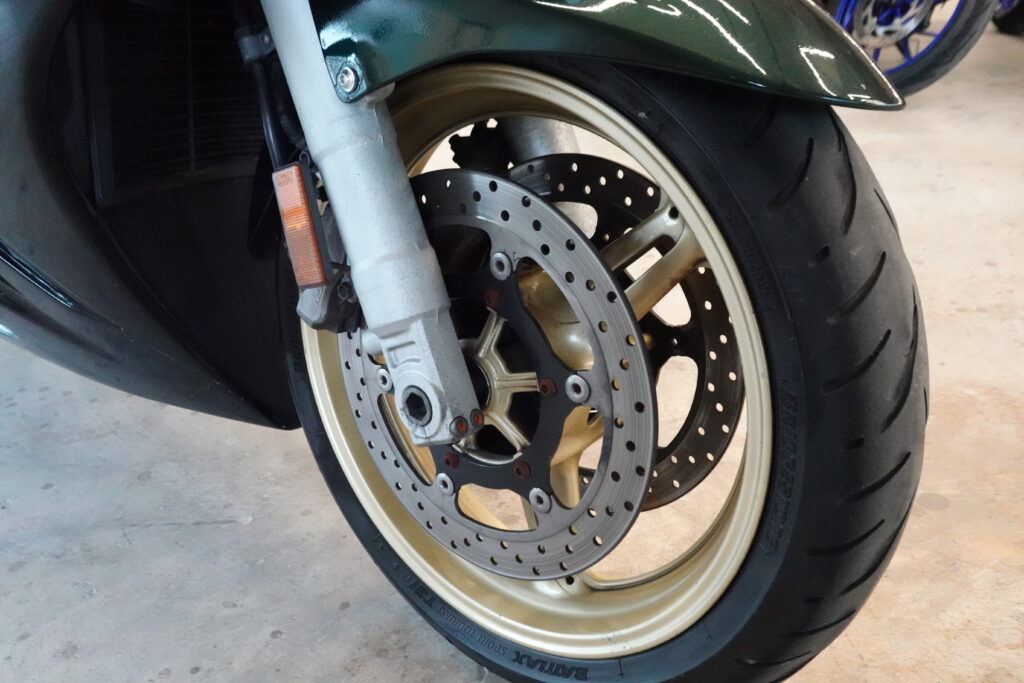
Braking wise, the front is equipped with twin 320 mm hydraulic discs paired with four-piston calipers, while the rear uses a 282 mm hydraulic disc with a two-piston caliper. Both ends are backed by ABS, and the linked braking system helps distribute braking force between the front and rear wheels for smoother and more stable deceleration.
Considering its weight, I never once felt that it struggled to slow down. The brakes offer plenty of stopping power while remaining progressive enough to avoid feeling overly sharp or intimidating. Combined with the stable chassis and well-balanced suspension, the FJR delivers a reassuring riding experience that encourages you to cover long distances with confidence, whether you’re cruising on the highway or carving through winding roads.
Verdict
Overall, the 2013 Yamaha FJR1300A proves that a great sport-touring motorcycle doesn’t need to be the newest model on the market to remain relevant. It successfully combines strong performance, long-distance comfort and impressive practicality into one package, making it a motorcycle that’s just as happy crossing state lines as it is carving through a series of corners.
For riders looking to venture into the world of sport-touring, the FJR1300A remains a compelling option, especially on the used market. It offers a level of refinement and equipment that many newer motorcycles still struggle to match, all while delivering an engaging riding experience whenever the road starts to twist.
After spending time with the FJR1300A, I must say, I’m genuinely impressed. Before riding it, I expected it to feel like a large, heavy touring motorcycle that simply excels at covering miles. Instead, I found a bike that feels surprisingly nimble, remarkably comfortable and far more entertaining than I had anticipated. It may be over a decade old, but the FJR1300A is proof that good engineering never really goes out of style.
If you’re searching for a capable sport-tourer that can comfortably handle daily rides, weekend getaways or cross-country adventures without sacrificing performance, the 2013 Yamaha FJR1300A is definitely worth considering. And if you’re currently looking for a used example, visit the iMotorbike website or come to our showroom to see this absolute machine up close.
2013 Yamaha FJR1300A Specifications
Engine & Performance
- Engine: 1,298cc liquid-cooled, DOHC, 16 valves, inline-four cylinder
- Max Power: 145 hp at 8,500 rpm
- Max Torque: 125 Nm Torque at 6,000 rpm
- Transmission: 5-Speed
- Clutch: Wet multiplate hydraulic clutch
Chassis & Suspension
- Frame: Aluminum twin-spar frame
- Front Suspension: 48mm telescopic fork, adjustable
- Rear Suspension: Link-type single rear shock with adjustable preload
- Front Brakes: Dual 320mm discs, 4-piston calipers with ABS
- Rear Brakes: 282 mm hydraulic disc, two-piston caliper with ABS
- Tires: 120/70Z17 (front), 180/55Z17 (rear)
Dimensions & Electronics
- Wet Weight: 291 kg
- Seat Height: Adjustable 805 mm to 825.5 mm
- Fuel Capacity: 25 Liters
- Electronics: Analog and digital meter, heated grips, adjustable windscreen, Anti-lock Braking System (ABS)






Facebook
Instagram
X (Twitter)
YouTube
LinkedIn
RSS