

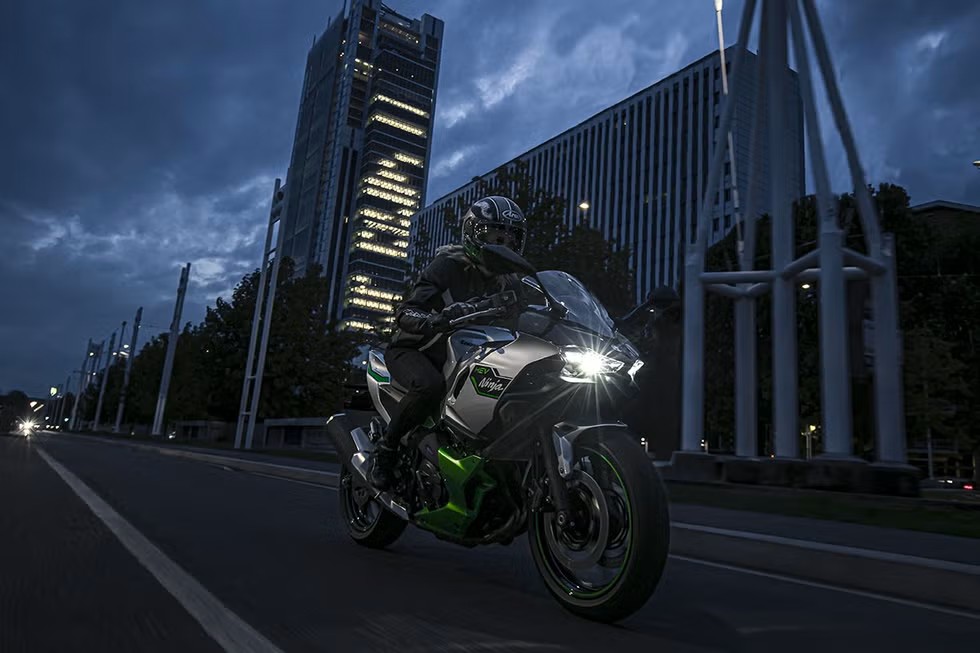
Kawasaki’s Z7 Hybrid is the world’s first mass-market hybrid motorcycle, combining a 451 cc twin with an electric motor for EV riding, hybrid modes and strong performance, marking a bold leap into a new era of motorcycle technology.
Subscribe to our Instagram Channel for instant news & updates!
The motorcycle industry has spent the past decade watching electric bikes evolve, falter, and slowly carve out their niche. Yet through all of it, no major manufacturer dared to bridge the gap between combustion and electric power until Kawasaki rolled out the Z7 Hybrid, the first mass-market hybrid motorcycle from a global brand.
In a landscape filled with fully electric machines from companies like Zero and LiveWire, Kawasaki’s decision to go hybrid instead of going all-in on EVs represents a bold and unconventional strategy. Rather than replacing petrol engines, the Z7 Hybrid attempts to combine the best of both worlds: electric silence and instant torque, paired with combustion range and familiar performance.
And while the execution isn’t perfect, the attempt itself is a milestone moment for motorcycling.
A Fusion of Two Powertrains
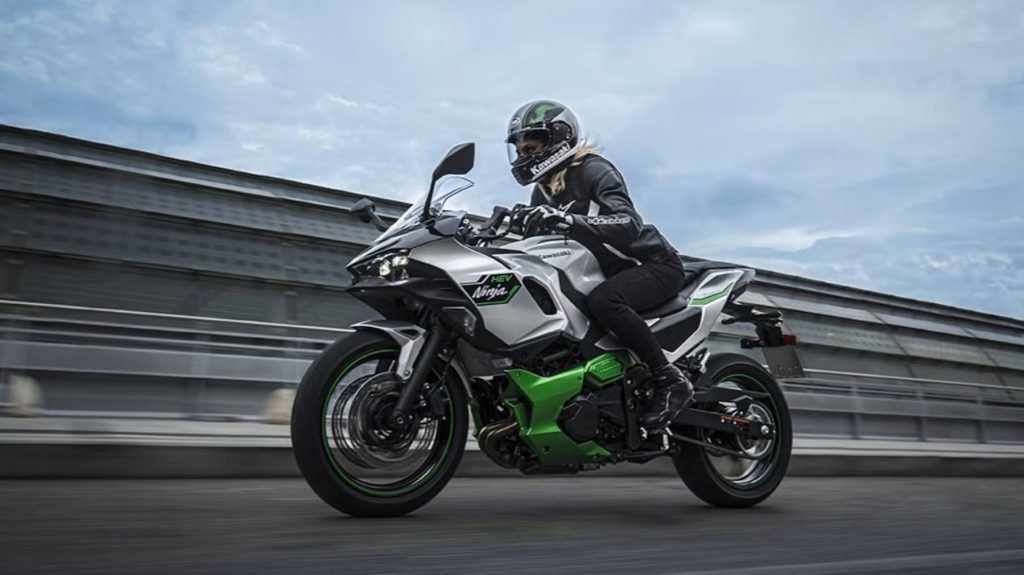
At the heart of the Z7 Hybrid is the same 451 cc parallel twin found in the Ninja 500 and Eliminator. Kawasaki stretched the trellis frame to house a 12 hp electric motor and a compact 1.37 kWh, 48-volt battery.
On paper, the pairing sounds ambitious. Kawasaki even claims acceleration comparable to a litre-class supersport thanks to electric assist, while still offering fuel consumption similar to a 250 cc bike. It’s a big promise, and although the Z7 Hybrid doesn’t fully achieve that hypersport punch, the combined output does deliver lively response, especially when the EV motor kicks in off the line.
The trade-off is weight. At 503 pounds, the bike feels noticeably heavier than a typical naked middleweight. The longer wheelbase also slows down steering despite sporty rake and trail numbers. In essence, the Z7 Hybrid rides differently from anything Kawasaki has made before.
Three Personalities, Three Ride Modes
Kawasaki didn’t just add electric assist, they built an entire control ecosystem around it.
EV Mode
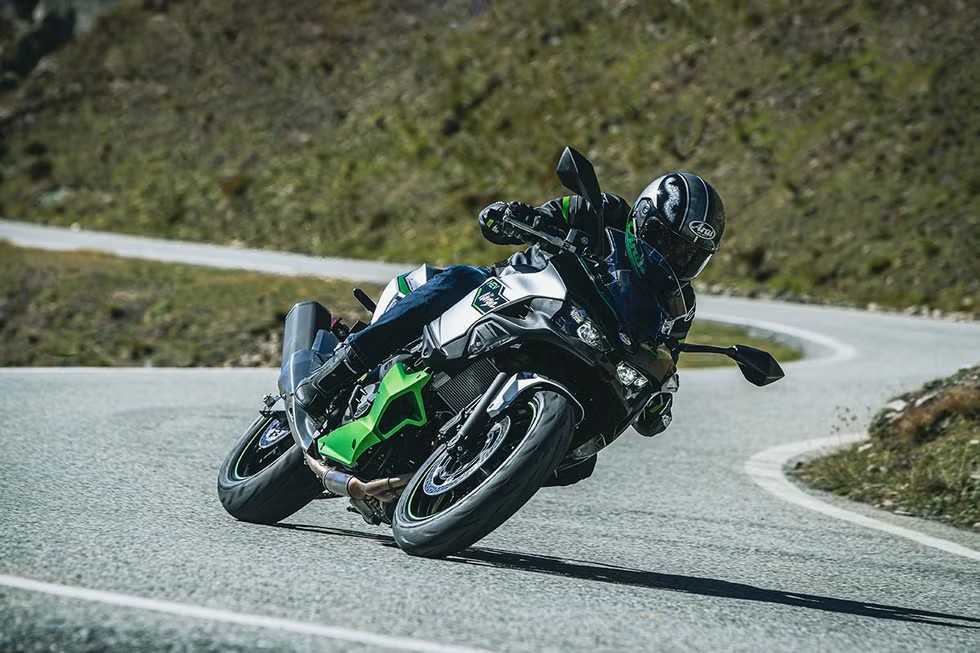
EV-only running provides 8–10 miles of electric range and a quiet top speed of around 40 mph. It’s useful for short hops, silent residential riding, or sneaking out early in the morning without waking the whole neighbourhood.
ECO-Hybrid Mode
This is the everyday mode. The bike switches between electric and gasoline power for maximum efficiency. You can shift manually with handlebar buttons or let the automated manual transmission do the work. The engine shuts off at traffic lights and restarts at around 15 mph.
Sport-Hybrid Mode
The twin stays alive full-time, delivering the most predictable response. Hit the e-boost button, and the electric motor dumps in extra torque, helping the bike reach 0–60 mph in a claimed 4.2 seconds.
The downside? Mastering these modes requires patience. Switching between them isn’t seamless, the button layout can be confusing, and the auto-shift logic feels overly conservative in ECO mode.
A New Approach Comes With New Challenges
Because the battery is engine-charged, there’s no plug-in capability. Kawasaki chose a self-contained system rather than leaning into EV charging infrastructure, which makes sense for convenience but limits how much electric range the bike can offer.
Traditional riders will also have to adjust their instincts. There’s no clutch lever, no toe shifter, and everything is managed through an automated gearbox and electric controls. It isn’t difficult, but it breaks decades of muscle memory for anyone accustomed to conventional motorcycles.
Still, Kawasaki adds helpful touches such as Walk Mode for slow parking manoeuvres, common on heavier touring bikes but rare in this class.
Is the Hybrid Concept Ready for Prime Time?
The Z7 Hybrid is undeniably innovative, but it also feels like an early-stage experiment. The technology works, but the interface can feel over-engineered. The buttons take time to memorise, transitions between modes can be abrupt, and the weight penalty is noticeable.
Yet the potential is enormous. With refinement, hybrid motorcycles could become a stepping stone between ICE and full electric, offering silent city commuting with the assurance of petrol-powered highway performance.
Kawasaki may not have built the perfect hybrid, but they have built the first real one, and that matters.
Market Reality: A Bold Bike With a Soft Landing
Priced at $12,499 (approx. RM59,000), the Z7 Hybrid hasn’t taken off explosively. Kawasaki is offering $4,000 (approx. RM18,900) off on its own website, and many dealers are discounting further to move inventory. At those prices, the Z7 Hybrid competes directly with conventional middleweights, making the value proposition far more appealing.
For riders curious about electric power but not ready to commit fully, the hybrid system’s short EV range combined with unlimited gasoline backup could be exactly the compromise they want.
The Z7 Hybrid isn’t just a motorcycle; it’s a signal. Kawasaki is experimenting, iterating and pushing boundaries while their competitors sit still. Where this leads next, more hybrids, bigger batteries, plug-in capability, remains to be seen.










Facebook
Instagram
X (Twitter)
YouTube
LinkedIn
RSS