

Spiro secures $50 million in credit funding to scale its electric motorcycles and battery-swapping network across Africa, targeting Boda Boda riders with lease-to-own and pay-per-swap models.
Subscribe to our Instagram Channel for instant news & updates!
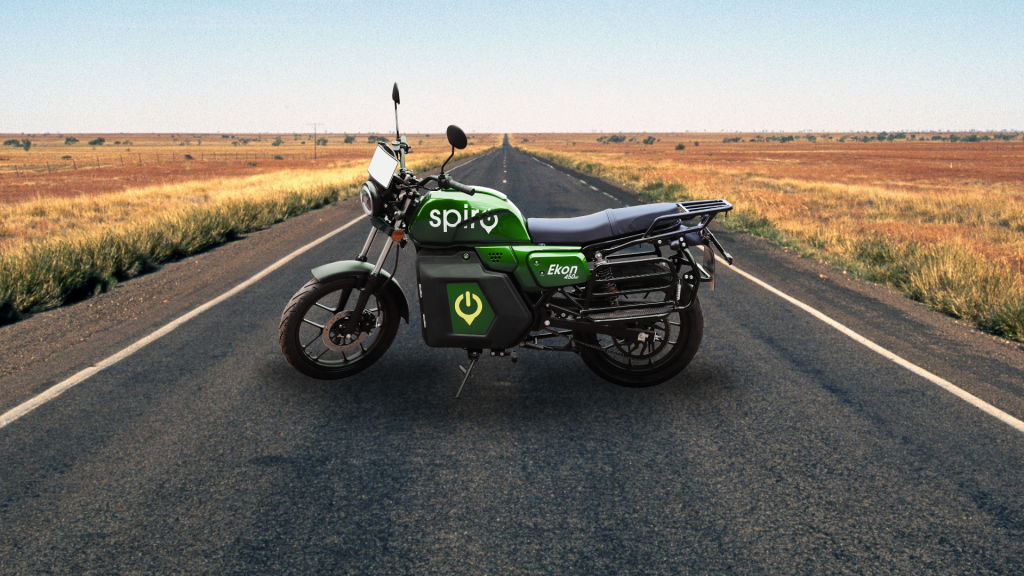
Spiro is accelerating its push into African e-mobility with another major funding boost. The Dubai-headquartered company, which operates from Nairobi, has secured $50 million in credit facilities to expand its electric motorcycle production and battery-swapping network across the continent.
Afreximbank, Nithio, and the Africa Go Green Fund (managed by Cyngum Capital) are providing the financing. Instead of raising equity, Spiro is using this debt funding to directly support its capital-intensive model, including manufacturing bikes, deploying batteries, and rolling out thousands of swap stations. The company announced a separate $100 million round in October 2025, but it did not disclose how it split that funding between debt and equity.
Six Countries and Counting
Spiro is now active in Kenya, Uganda, Rwanda, Nigeria, Benin, and Togo, with pilot projects underway in Cameroon and Tanzania. According to the company, it has deployed more than 80,000 electric motorcycles, put over 300,000 batteries into circulation, and built upwards of 2,500 swap stations. The network has facilitated more than 30 million battery swaps and over one billion CO₂-free kilometres.
Its primary focus is the motorcycle taxi sector, known as Boda Bodas in East Africa, where two-wheelers are a backbone of urban mobility and income generation.
Lowering the Cost Barrier
Upfront cost remains the biggest hurdle for many riders. Spiro tackles this challenge with a lease-to-own model that allows drivers to pay a deposit and then make instalments toward owning the bike. The company separates the battery under its Battery-as-a-Service system, so riders don’t purchase it outright but pay per swap instead. By structuring it this way, Spiro lowers the initial investment and takes on the responsibility for battery management and replacement.
Swapping, Not Waiting
Spiro’s “automated” swap stations are locker-based systems with digital authentication. Riders unlock a charged battery compartment, manually swap the 10–15 kg unit, and continue riding. In some cities, staffed swap stations, often at kiosks or petrol stations, allow trained personnel to perform the exchange in minutes, sometimes without the rider even dismounting.
By combining vehicle financing, battery services, and infrastructure under one roof, Spiro is building more than just electric motorcycles, it’s constructing a scalable energy and mobility ecosystem tailored to Africa’s fast-growing urban centres.



















Facebook
Instagram
X (Twitter)
YouTube
LinkedIn
RSS