

Kawasaki’s new patent reveals a flexible subframe design that allows different electric motors to fit a single bike chassis, simplifying production and cutting costs for future e-motorcycles.
Subscribe to our Instagram Channel for instant news & updates!
For over a century, engines have defined motorcycles, delivering the roar in your chest, the vibration in your hands, and shaping the structure around every tube, tank, and seat. Electric motorcycles are changing that completely. With motors small enough to fit in the palm of a hand, the design constraints that once shaped every bike are disappearing. And Kawasaki is ready to seize the opportunity.
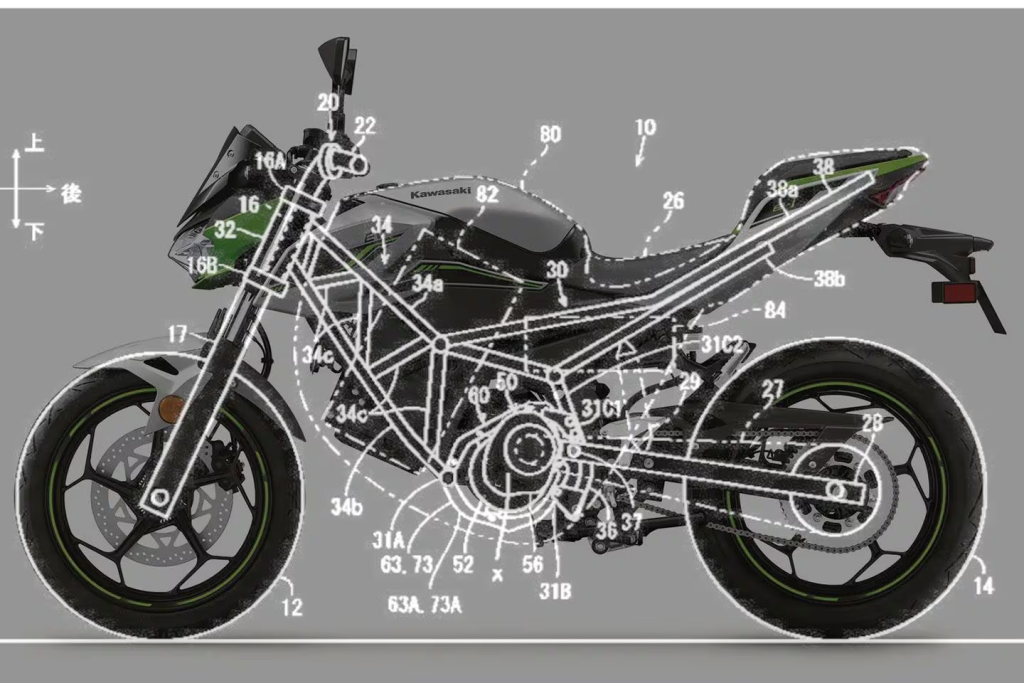
A new patent from Team Green shows a clever modular chassis capable of accommodating a variety of electric powertrains. Think of it like cars. For decades, manufacturers have offered a single model with multiple engines, from petrol inline-fours to V8s or even EV setups, without altering the vehicle’s main structure. Kawasaki is bringing that kind of flexibility to motorcycles, where compact design usually leaves no room for swapping power units.
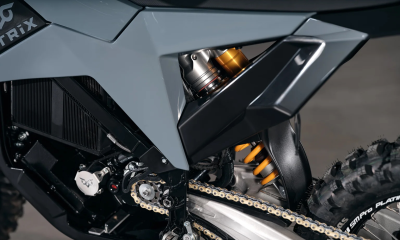
The patent shows Kawasaki splitting the subframe into upper and lower segments. Designers can swap or modify to fit different motors and mounting positions while adding structural rigidity.
Instead of bolting the motor directly to the main frame, as in the current Z e-1 and Ninja e-1 models, the motor now sits on this intermediate subframe. The patent explains that designers can mount different motor types by making only minor adjustments to the smaller attachments, avoiding major changes to the main chassis.
The advantages are clear: parts sharing, simplified production, lower R&D costs, and potentially lower prices for customers. Electric motorcycles still cost more than their gasoline counterparts when you factor in performance and battery range. Any innovation that reduces costs could help bring e-bikes into the mainstream.
Kawasaki’s new approach may not grab attention like a roaring engine, but it could quietly redefine electric motorcycle design, making them more flexible, modular, and accessible to a broader range of riders.













Facebook
Instagram
X (Twitter)
YouTube
LinkedIn
RSS