

Motorcyclists make up the majority of road fatalities in Malaysia, reflecting high exposure, minimal protection and the realities of daily commuting rather than simple rider fault.
Subscribe to our Instagram Channel for instant news & updates!
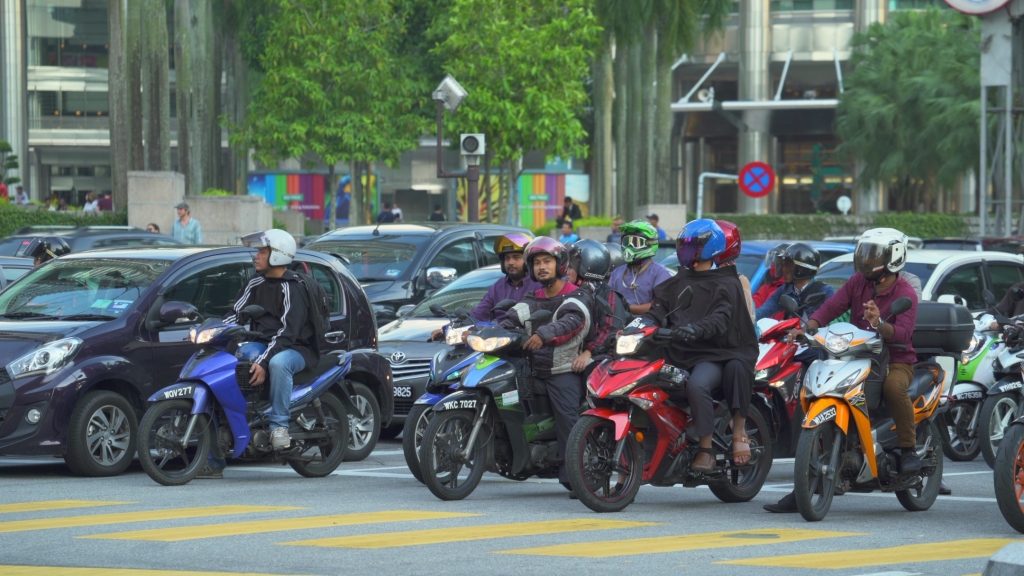
Every year, Malaysia’s road fatality figures return to the same sobering pattern: motorcyclists and pillion riders make up the largest share of deaths on the road. The proportion is not just high. It is consistently dominant, hovering around the majority of total fatalities. In a country where motorcycles are everywhere, this trend is deeply tied to how Malaysians actually move, work and commute on a daily basis.
The widespread use of small-capacity motorcycles, commonly known as kapchai, plays a major role in shaping this reality. These bikes are affordable, fuel-efficient and easy to navigate through congested traffic, making them the default choice for many commuters, students and delivery riders. For a large segment of the population, riding is not a preference but a practical necessity.
However, that same convenience comes with a built-in safety disadvantage. Compared to cars, motorcycles provide little to no physical protection during a collision. Even at moderate speeds, the absence of a protective structure means riders are far more exposed to serious injury. It is not difficult to see why accident outcomes involving motorcycles tend to be more severe.
Another key factor is sheer volume. With millions of motorcycles registered nationwide, they naturally make up a significant portion of road users at any given time. Higher presence on the road translates into higher exposure to risk. In dense urban traffic and busy arterial roads, riders are constantly navigating between larger vehicles, tight lanes and unpredictable driving patterns, all of which increase vulnerability even if the rider is cautious.
There is also a tendency to assume that high fatality numbers automatically mean motorcyclists are the main cause of accidents. But the reality is more complex. Fatality statistics measure who suffers the most severe consequences, not necessarily who caused the crash. Because riders are physically unshielded, they are more likely to sustain fatal injuries even in incidents where another vehicle is involved.
This distinction matters. It shifts the discussion away from blame and toward risk imbalance. A collision between a motorcycle and a heavier vehicle rarely results in equal outcomes, regardless of fault. The difference in size, protection and impact absorption creates a one-sided level of danger for riders.
The rising fatality trend in recent years also reflects changing traffic conditions. Roads are busier, commuting distances are longer, and time pressures are higher. In such an environment, motorcycles often share space with vehicles travelling at varying speeds, which increases the likelihood of critical incidents. Even a small lapse in attention, from any road user, can have disproportionately severe consequences for someone on two wheels.
Ultimately, the data does not simply point to motorcycles as “dangerous vehicles.” Instead, it highlights how exposed riders are within Malaysia’s traffic landscape. When the most commonly used form of transport is also the least protected, the fatality imbalance becomes less surprising and more structural.
Understanding this context is essential. The conversation about road safety cannot rely on surface-level assumptions alone. It requires acknowledging that the high number of motorcycle fatalities is closely linked to exposure, vulnerability and real-world commuting patterns, not just behaviour on the road.













Facebook
Instagram
X (Twitter)
YouTube
LinkedIn
RSS