

Are modern motorcycles helping beginners, or making them too dependent?
Subscribe to our Instagram Channel for instant news & updates!
Motorcycles today are more advanced than ever. Features like ABS, traction control, riding modes, and quickshifters are no longer limited to high-end superbikes. Even entry-level motorcycles now come packed with electronic rider aids. This raises an important question for beginners: do new riders actually need rider aids, or are these systems creating a false sense of confidence?
To answer that, we need to look beyond marketing and understand how rider aids really affect new riders in the real world.
What Are Rider Aids, and Why Are They Everywhere?
Rider aids are electronic systems designed to assist the rider by reducing mistakes that could lead to loss of control. The most common examples include Anti-lock Braking System (ABS), traction control, ride-by-wire throttles, and selectable riding modes.
Manufacturers include these systems because they improve safety, meet regulations, and appeal to new buyers. For beginners especially, rider aids make motorcycles feel less intimidating. The bike feels smarter, more forgiving, and easier to manage during everyday riding. However, the presence of these systems also changes how riders learn and react on the road.

How Rider Aids Can Help New Riders
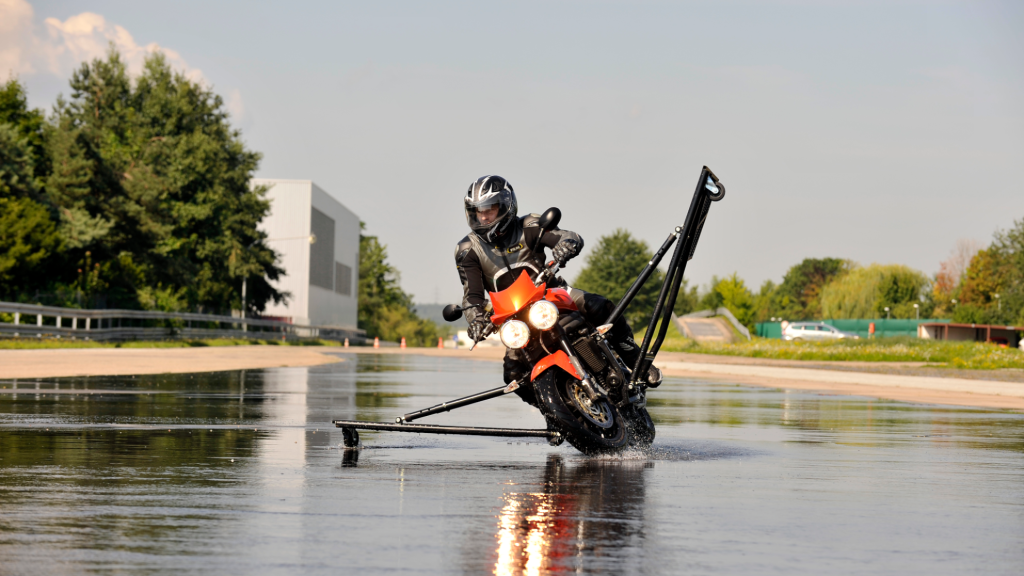
For many new riders, rider aids act as a safety net during the learning phase. ABS can prevent wheel lock-up during panic braking, which is one of the most common beginner mistakes. Traction control can help when riding on wet roads or loose surfaces, especially in unpredictable traffic conditions.
These systems allow beginners to focus more on traffic awareness and basic control, rather than constantly worrying about making a critical mistake. In busy urban environments, rider aids can genuinely reduce the risk of accidents during the early months of riding. In this sense, rider aids do not replace skill, but they can reduce the consequences of inexperience.
The Risk of Over-Reliance on Technology
The downside appears when new riders begin to rely on rider aids instead of developing proper technique. When electronics constantly intervene, riders may not fully understand how braking traction works or how throttle input affects stability.
This becomes a problem when a rider eventually switches to a motorcycle with fewer aids, or when a system fails or is turned off. Without a solid foundation of basic skills, the rider may struggle to react correctly in emergency situations. Over time, some riders may confuse electronic assistance with actual riding ability, leading to overconfidence.

Do Rider Aids Slow Down Skill Development?
Rider aids do not automatically make someone a worse rider, but they can slow skill development if the rider never pushes themselves to learn proper control. Riders who grow up with heavy electronic assistance may take longer to understand braking limits, throttle sensitivity, and body positioning.
On simpler motorcycles without rider aids, mistakes are more noticeable and learning tends to be more direct. On modern bikes, mistakes are often quietly corrected by the system, sometimes without the rider even realising it. The key issue is not the technology itself, but how the rider chooses to learn while using it.
Finding the Right Balance as a New Rider
For new riders, the best approach is balance. Rider aids should be treated as backup systems, not primary riding tools. Learning proper braking technique, smooth throttle control, and good road awareness is still essential, regardless of how advanced the motorcycle is.
Motorcycles that allow adjustable or switchable rider aids offer a good compromise. As confidence and skill improve, riders can reduce intervention levels and better understand the bike’s natural behaviour. This encourages growth without removing the safety benefits entirely.
So, Do New Riders Really Need Rider Aids?
Rider aids are not a requirement for becoming a good rider, but they can be a valuable tool during the early stages of riding. They improve safety, reduce stress, and help beginners adapt to real-world traffic conditions faster.
That said, rider aids should never replace proper training, practice, and respect for the motorcycle. A skilled rider is still defined by judgement, control, and awareness, not by how many electronic systems their bike has. In the end, rider aids are best seen as helpful companions, not shortcuts to skill.
Do new riders really need rider aids
Do new riders really need rider aids like ABS and traction control? We explore whether modern motorcycle technology helps beginners or slows skill development.











Facebook
Instagram
X (Twitter)
YouTube
LinkedIn
RSS